
Skip to content

Davis & Salt Lake County

CMB HVAC — Utah's Local HVAC

Airflow Testing & Balancing

Measure the Airflow Before Guessing at the Fix

Uneven rooms can be caused by duct restrictions, leakage, return-air limitations, equipment setup, building load, or control problems. CMB HVAC measures the system and room delivery before adjusting dampers or recommending duct changes.

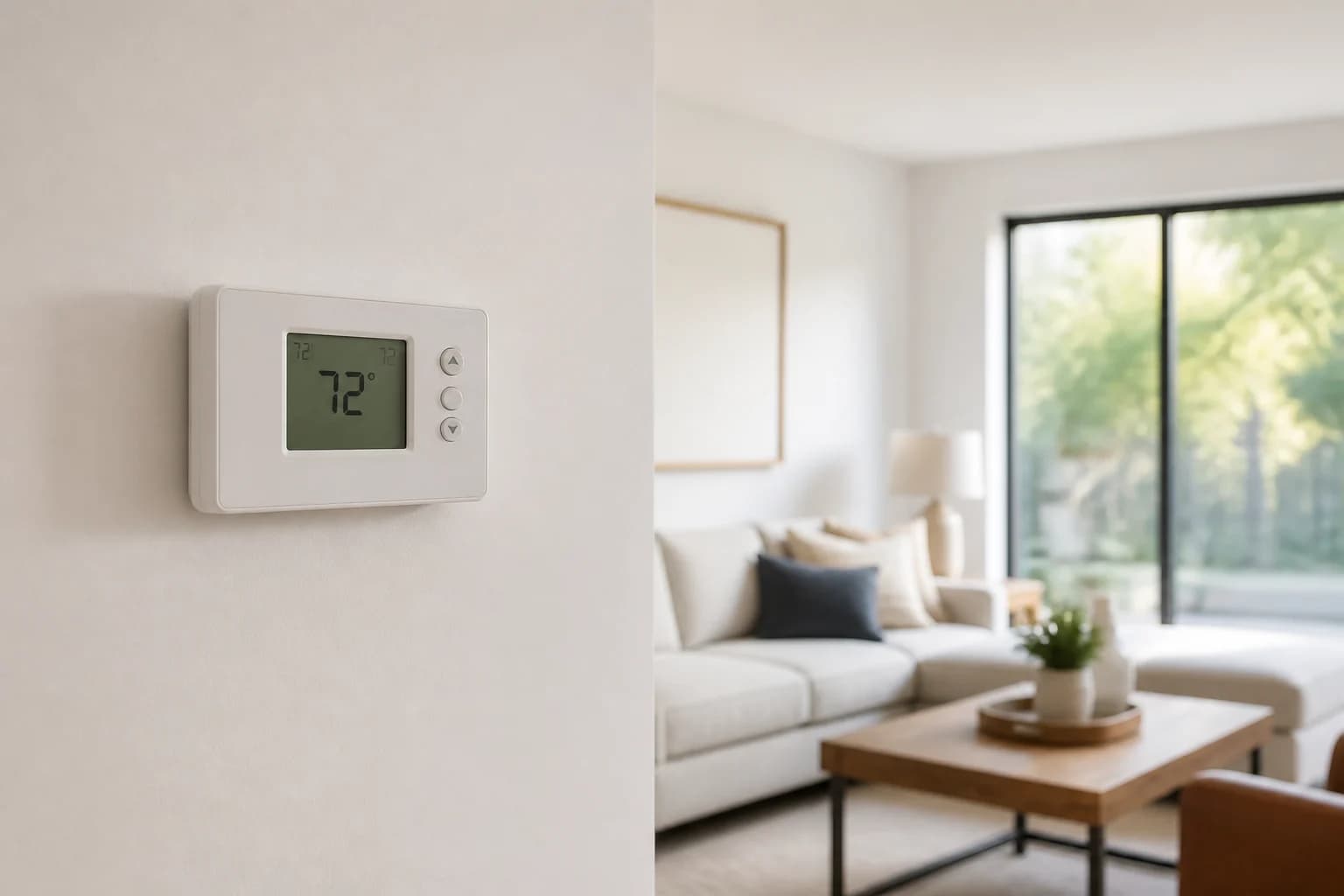
Wall thermostat reading 78 degrees mounted on an interior wall
5.0 ★
369 Google Reviews
Free
Service Call
Upfront
Fixed Pricing
Licensed
UT 12883822-5501

Measure the Airflow Before Guessing at the Fix

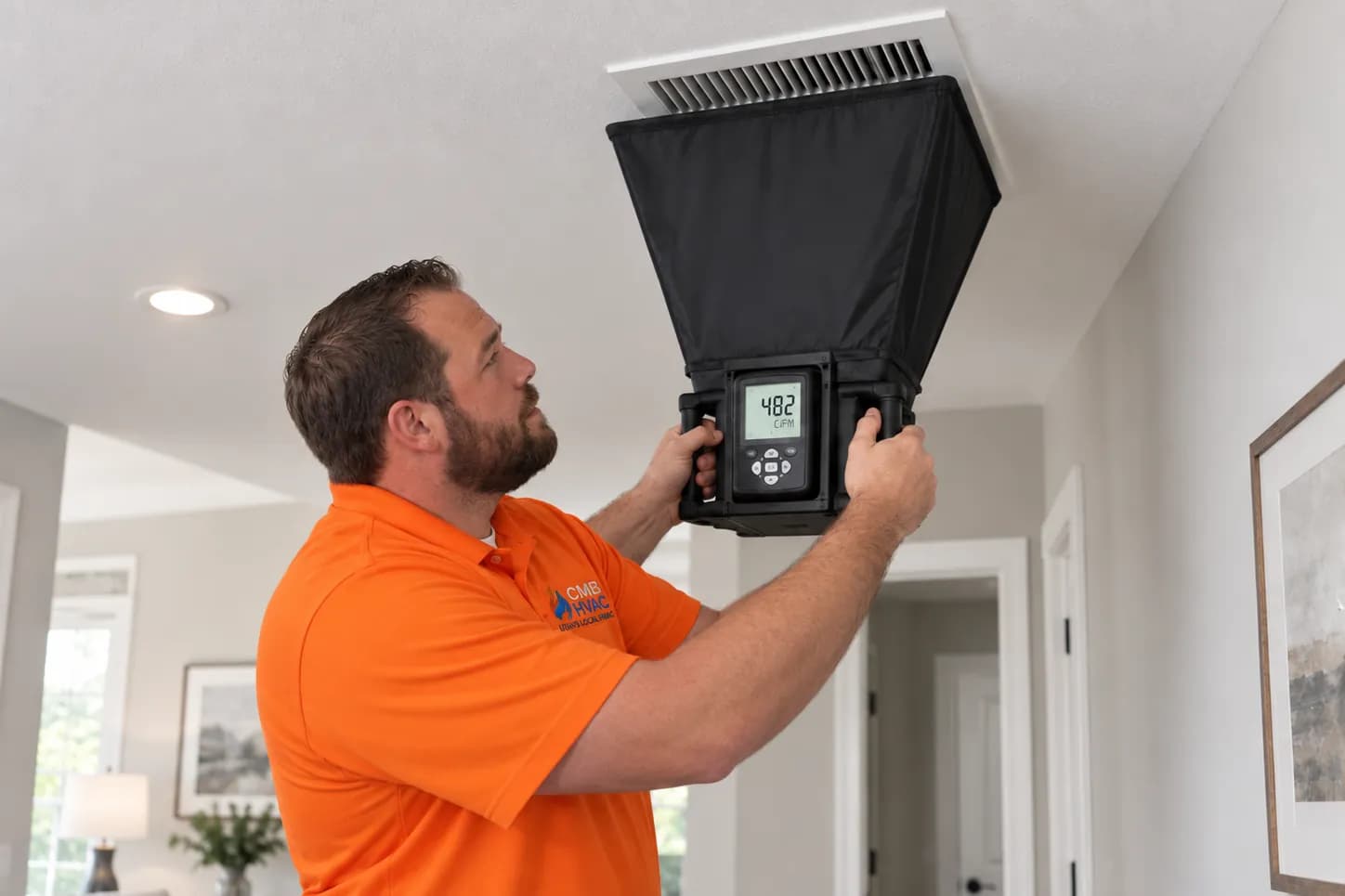
The room that's always hot and the room that's always cold are symptoms with a suspect list: duct restrictions, leakage, undersized returns, blower setup, insulation shortfalls, or a system fighting its own ductwork. Every one of those has a different fix and a different price — which is why guessing at dampers, gadgets, or equipment swaps wastes money in an order of magnitude of ways. Measurement first: total static pressure, blower airflow, and room-by-room delivery, compared against what each room actually needs.

Balancing is the measurement-led discipline that follows: adjust dampers, register airflow, and equipment setup until delivery matches design — and document the before/after. What balancing is not: walking around closing vents in hot rooms. Closing registers raises system pressure, starves the blower, and can push a marginal system into limit trips and coil freeze — the most popular 'balancing' method is the one that causes the next service call.

What Measurement Buys You

  • Static pressure measured

    The system's breathing room quantified — the number that explains most 'weak airflow' complaints.

  • Room delivery mapped

    Each room's airflow compared to its target — the unevenness located instead of guessed at.

  • Adjustments documented

    Every damper and blower setting recorded — the balance that can be repeated and trusted.

  • Bigger problems named

    When the numbers point at duct design, insulation, or equipment, the report says so — with the referral or quote.

When Airflow Testing Is Worth It

Each symptom is a measurement waiting to happen — the anchors explain what we test.

What Airflow Testing & Balancing Includes

  • Total external static pressure measured against the equipment's rating
  • Blower setup reviewed: speed taps or ECM configuration verified
  • Filter and coil pressure drop checked — the hidden restrictions
  • Room-by-room airflow measured and compared to design targets
  • Supply and return pathways inspected for obvious restrictions
  • Dampers adjusted and the system balanced, settings documented
  • Before/after report with the numbers — and honest next steps if ducts or envelope need work

How We Test Airflow

  1. Measure the system

    Total external static pressure and blower airflow — how hard the system is working and what it's actually moving.

  2. Find the hidden restrictions

    Filter loading, coil condition, and obvious duct restrictions — the cheap fixes live here first.

  3. Map the rooms

    Delivery measured room by room and compared to load-based targets — the imbalance located precisely.

  4. Check the setup

    Blower configuration, equipment staging, and thermostat behavior — the control side of delivery.

  5. Balance & report

    Dampers adjusted against the numbers, settings documented, before/after delivered in writing.

Balancing Is One Outcome — Here Are the Others

Sometimes the measurement says 'adjust'; sometimes it says something bigger. Both are honest outcomes.

  • Balance the system

    Damper adjustments and blower setup tuned until delivery matches targets — the fix when the ducts are fundamentally sound.

    Best for: uneven delivery on sound duct systems

  • Targeted duct work

    Restrictions cleared, returns added, sections sealed or resized — when the numbers localize a duct defect.

    Best for: measurement-pointed restrictions and return deficits

  • Envelope or equipment path

    Insulation shortfalls, undersized equipment, or zoning conversations — named honestly when the airflow isn't the story.

    Best for: complaints the ducts were only relaying

Technician inspecting a furnace with a flashlight in a tight utility space
The diagnosis lives in the readings, not the hallway feel — static pressure, blower setup, and room delivery, measured.

What Shapes a Balancing Visit

Testing is scoped to the system; the quote names what's included before the visit.

  • System size

    More rooms, more zones, more measurement points — the map scales with the house.

  • Access to ducts

    Dampers and runs in open attics adjust easily; buried or finished-space runs limit what balancing can reach.

  • Equipment type

    Multi-stage and variable-speed systems carry more setup to verify — configuration is part of the measurement.

  • What the numbers find

    Balancing is quoted on its own; duct corrections the testing reveals are quoted separately — never auto-scoped.

Balancing visits are quoted flat-rate, with the before/after report included — every adjustment documented. When testing points past balancing at duct design, returns, insulation, or equipment, the findings say so with the numbers, and that work gets its own written quote. No vent gets closed as a 'fix' on our watch.

How a Balancing Visit Runs

  1. Baseline

    Static pressure, blower airflow, and room delivery measured — the system's honest snapshot.

  2. Clear the cheap stuff

    Filter, coil, and obvious restrictions addressed first — the fixes that skew every other reading.

  3. Balance

    Dampers and blower setup adjusted against the targets, room by room, until delivery matches design.

  4. Verify & report

    After-measurements documented, settings recorded, and next steps named if the numbers point further.

Two Seasons of Uneven Rooms

Utah's climate gives homes two distinct ways to be uneven: the summer pattern (west-facing rooms cooking while shaded rooms over-cool) and the winter pattern (basements comfortable while upstairs starves). Day-night swings expose both within the same week. The other local factor is attic ductwork — ducts in a 130°F attic lose cooling capacity before the air ever reaches the register, which is why attic-insulation and duct-sealing conversations often ride along with balancing findings here.

  • Test in both seasons when you can — a summer balance and a winter check tell different truths
  • Attic temperature is part of the local airflow math — insulation findings ride along often
  • Fall is the practical balancing season: mild enough to test, early enough to fix before the extremes

The Airflow Vocabulary

The terms from your report, explained — and the anchors for the symptoms above.

Static Pressure, Translated

Static pressure is the resistance the blower pushes against — the duct system's blood pressure. Every filter, coil, fitting, and run adds some; the equipment has a rated maximum it's designed to work within. Exceed it and airflow collapses, the blower strains, limits trip, and efficiency quietly leaves. It's the first number we measure because it explains most 'weak airflow' complaints in one reading — and because the cheap causes (a loaded filter, a dirty coil) show up here before anything expensive does.

Balancing vs. Closing Vents

Balancing is measurement-led adjustment: dampers set so each room's delivery matches its calculated target, verified with airflow readings, documented so it holds. Closing supply vents in problem rooms is the folk version — and it backfires mechanically, because a closed register raises system pressure, starves the blower, and redistributes nothing: the air just leaks harder somewhere else. In bad cases it trips limits or freezes coils. The difference between the two is an instrument, a target, and a written record — that's the whole discipline.

When the Answer Is Bigger

Sometimes the numbers end the balancing conversation honestly: ducts that were never designed for the house, a return side that's one central hole, insulation that can't hold the envelope, or equipment that's simply the wrong size. A good report says so with the data behind it and names the actual next step — duct design, return additions, sealing, insulation, or an equipment conversation — rather than selling balancing on a system it can't fix. The measurement is worth the same either way: it's the truth about your air.

Airflow Questions, Answered

Why is one room always hotter or colder?
Because that room's delivery doesn't match its need, and the causes rank in rough order of likelihood: a duct restriction or leak on its run, a return path that's missing or starved, a damper set wrong (or missing), a load the room gained (sun, occupancy, electronics) that the design never knew, or insulation failing around it. The measurement pass ranks them for your actual house — delivery per room against each room's target turns 'always hot' from a mystery into a diagnosis with an address.
Can I balance the system by closing vents?
Please don't — it's the most common instinct and it works against the machine. Closing supply registers doesn't redirect air to other rooms so much as it raises pressure in the whole system: the blower moves less air, rooms at the end of runs starve faster, and a marginal system can trip its limit (furnaces) or freeze its coil (cooling) under exactly the conditions you created. If a room is unbearable, the measurement-led balance finds which damper or duct is the honest cause — usually not the one in the suffering room.
What is static pressure?
It's the resistance your blower works against — think of it as the duct system's blood pressure. Filters, coils, fittings, and duct runs all add resistance, and equipment has a rated maximum it's designed to operate under. Above that rating, airflow drops off steeply, the blower works harder for less delivery, furnaces run hot, and AC coils ice. It's measured in inches of water column with manometer taps at the equipment, and it's the single most explanatory reading in an airflow visit — the first number we take and the one that usually names the story.
Can a larger blower fix weak airflow?
Rarely, and usually not for long. Weak delivery is almost always a resistance story — restricted ducts, undersized returns, a loaded filter or dirty coil — and a bigger blower pushing through the same restriction raises static pressure further while moving a little more air louder. On systems where the blower genuinely is undersized for the ductwork, the honest fix pairs the equipment conversation with the duct conversation. The measurement first is what separates a real capacity question from a restriction wearing one: the static reading knows.
Will zoning solve the problem?
Only if the problem is control, not delivery. Zoning changes which areas get air when — it doesn't make more air, and it punishes duct systems without the static headroom to serve one zone through a sliver of duct. The honest sequence is the one we run: measure delivery and static first. If the ducts can't deliver to the problem room when the whole system is calling, zoning can't either — duct work or balancing is the actual answer. If delivery is fine and the issue is when and how long each area gets served, zoning becomes a real conversation, evaluated on our zoning page.

Measure the Airflow, Then Fix the Right Thing

Book online or call. Static pressure, blower setup, and room delivery measured — with the before/after in writing.