
Skip to content

Davis & Salt Lake County

CMB HVAC — Utah's Local HVAC

Tank Installation & Replacement

Storage Water Heaters Sized for Real Hot-Water Demand

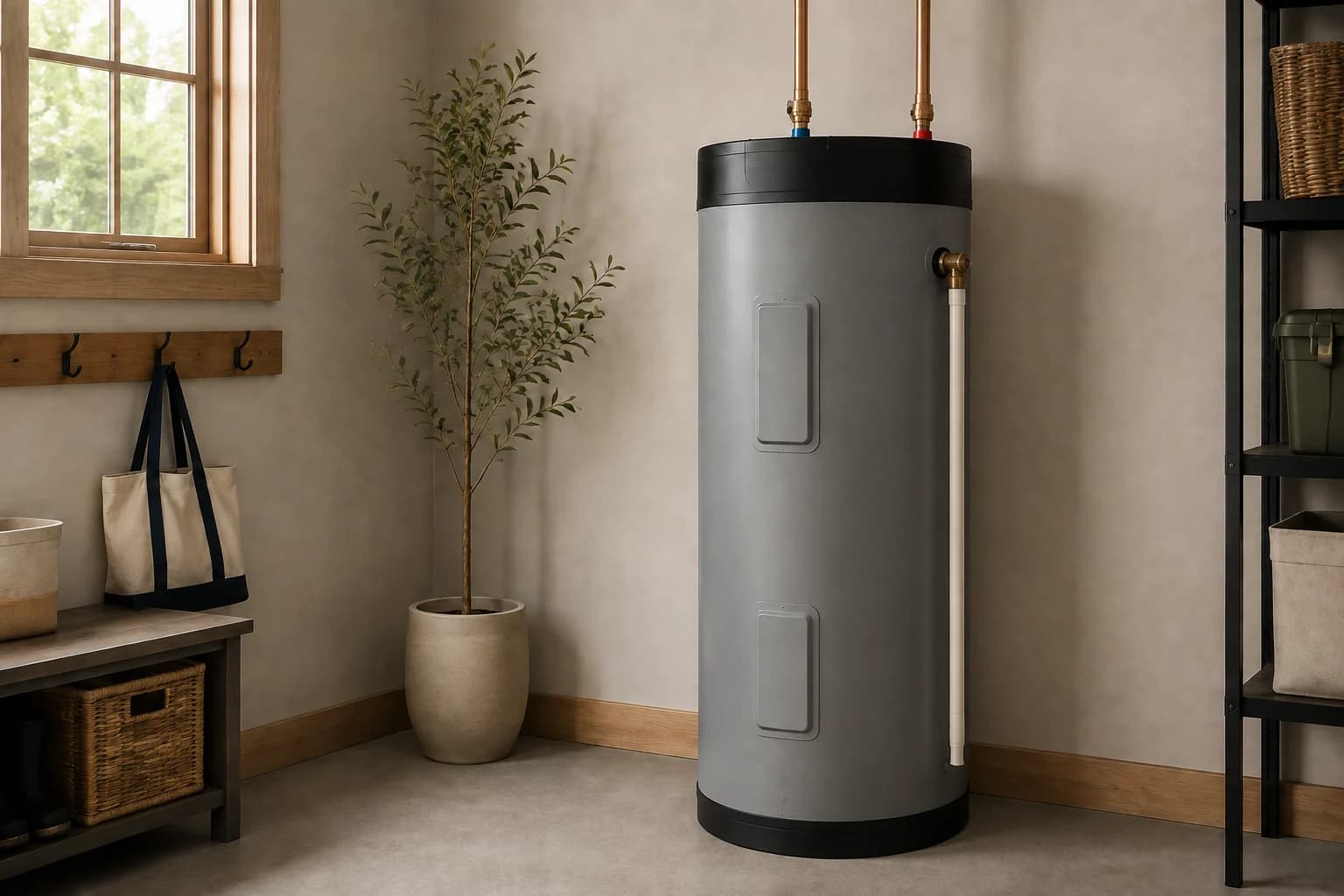
A replacement water heater must fit more than the available space. CMB HVAC evaluates household demand, recovery rate, fuel, venting, gas or electrical capacity, plumbing, pressure control, drainage, and code requirements before presenting options.

Plumber reconnecting fittings on a gas water heater
5.0 ★
369 Google Reviews
Free
Service Call
Upfront
Fixed Pricing
Licensed
UT 12883822-5501

Storage Water Heaters Sized for Real Hot-Water Demand

The old tank tells you what was there, not what the house needs: families change, fixtures get added, and a tank sized for a previous owner's habits is why someone is reading this page in a cold shower. We size from first-hour rating and recovery against your actual morning, then check everything the new unit touches — fuel capacity, venting, piping, pressure control, drainage, and the code items (pan, discharge piping, restraints, expansion control) that separate a professional install from a swap.

Leaking right now? Close the cold-water shutoff on top of the tank, and shut off gas or power to the unit. If water is anywhere near electrical components or you smell gas, that's a leave-and-call situation — gas utility or 911 first, plumber second. Then call us; a failed tank is usually a replacement rather than a repair, and we'll confirm which on the visit.

What Replacement Includes

  • Demand-based sizing

    First-hour rating and recovery matched to your household's actual busiest hour — calculated, not guessed.

  • Code items standard

    Drain pan, discharge piping, expansion control, restraints, shutoff — every code item on the quote, in the install.

  • Startup safety checks

    Leaks checked, venting verified, temperature set with you — the install isn't done until it's proven.

  • Permit and disposal handled

    Mechanical/plumbing permit pulled, old tank hauled away — the paper trail and the driveway both left clean.

When a Tank Is Telling You Something

Some signs mean plan ahead; one means act today. The anchors explain what each involves.

  • Water at the base of the tank

    Active leaking is the end of the road for a tank — shutoffs first, then the replacement conversation.

  • Rumbling and popping

    Sediment layered on the burner side is the tank describing its water quality — sometimes serviceable, often telling.

  • Rusty or metallic hot water

    Hot-only discoloration points inside the tank — anode and lining are the story the water is telling.

  • A tank older than a decade

    Age alone isn't a verdict — but it's the honest moment to compare replacement against waiting for failure.

What the Quote Covers

  • Demand evaluation and sizing calculation, shared with the quote
  • Equipment options with capacity, efficiency, and warranty compared
  • Fuel, venting, gas/electrical capacity, and plumbing connections verified
  • Drain pan, shutoff, T&P discharge piping, restraints, and expansion control per code
  • Mechanical/plumbing permit pulled and inspection scheduled
  • Old unit drained, disconnected, and hauled away
  • Startup: leak checks, venting verification, temperature set with you
  • Warranty registration and operation walkthrough

How We Size and Specify a Tank

  1. Measure the demand

    Household size, fixture count, and usage rhythm — translated into first-hour rating and recovery needs.

  2. Check the utilities

    Gas capacity and venting route (or electrical service for electric units) verified against candidate models.

  3. Inspect the connections

    Piping, shutoffs, drain provisions, pressure, and expansion control — what the new unit inherits.

  4. Verify the code items

    Pan, discharge piping, restraints, expansion control where required — against your jurisdiction and the appliance's instructions, not folklore.

  5. Present options

    Two or three properly sized units compared — capacity, efficiency, warranty, and footprint. Flat-rate, one page.

Standard, Power-Vented, or Short

Most replacements resolve into one of three shapes — the evaluation decides which fits.

  • Standard atmospheric vent

    The dependable default: natural-draft venting, straightforward installation, and the value option when the venting route already works.

    Best for: like-for-like replacements with sound existing venting

  • Power-vent / higher efficiency

    A fan-assisted unit that vents through simpler routes and recovers more of the fuel's heat — more equipment cost, more placement freedom.

    Best for: basements without a workable chimney route

  • Short / lowboy / space-constrained

    Lower-profile tanks for crawlspaces, closets, and attic platforms — same engineering, shaped for the space the house actually offers.

    Best for: tight mechanical spaces

Technician checking a water heater's burner assembly
Gas-fired tanks add combustion and venting to the checklist — verified at startup, not assumed from the box.

What Drives Replacement Cost

The tank is one line. The install conditions around it decide most of the number.

  • Capacity & efficiency tier

    Bigger and more efficient cost more up front; the right size comes from the demand calculation, not the shelf.

  • Code upgrades inherited

    A drain pan that doesn't exist, missing expansion control, or discharge piping to correct — older installs carry these into the quote.

  • Venting changes

    Switching venting categories or rerouting through the home is real scope — verified before the quote, priced on it.

  • Fuel and location

    Gas versus electric, basement versus attic platform — access and utility capacity both shape the work.

Replacements are quoted flat-rate on one page — equipment, materials, permit, disposal, and labor itemized. Code requirements are applied to your jurisdiction and the appliance's instructions, not quoted as universal rules; where your local requirements add scope, it's a line on the quote, not a surprise on install day.

How a Replacement Runs

  1. Evaluate & quote

    Demand calculated, utilities and connections verified, options presented flat-rate. No deposit until you decide.

  2. Install day

    Water and fuel off, old tank drained and removed, new unit set with pan, connections, discharge, and restraints to code.

  3. Startup & safety

    Filled, fired, leak-checked, venting verified, temperature set with you — safety checks documented.

  4. Clean & register

    Old unit hauled, space cleaned, warranty registered, operation walked through. Hot water restored before we leave.

Hard Water, Cold Groundwater

Two local realities shorten tank lives here. First: Utah's hard water plates the tank bottom with sediment, which is where the rumbling comes from and why local tanks age faster than their warranty suggests. Second: cold incoming water — near-ground temps in winter mean every tank works harder per gallon — raises the effective demand on busy mornings. Both push the sizing conversation toward honest first-hour ratings and the maintenance conversation toward periodic flushes, which is why the two pages in this family travel together.

  • Know where the tank's shutoff and fuel supply are before you need them
  • Rumbling is sediment — a flush conversation is cheaper than a replacement one
  • Basement installs: check the drain pan's line before the heavy season

The Water-Heater Vocabulary

The terms from your quote, explained — and the anchors for the signs above.

Replacement Indicators & the Leak Protocol

Water at the base, hot-only rusty water, and rumbling sediment are the classic late-life signs; age past a decade shifts the repair-versus-replace math. Active leaking is different in kind: tanks that start weeping tend to finish failing fast, and the protocol is shutoffs first — cold-water inlet on top, then gas or power — followed by the replacement call. Water near electrical components, or any gas odor, upgrades that protocol to leave-and-call-the-utility. A drained tank is an inconvenience; the alternatives aren't.

First-Hour Rating, Recovery & Efficiency

First-hour rating is how much hot water the tank delivers during a busy hour — stored volume plus what it recovers while draining. Recovery rate is how fast it reheats, and it's where fuel type and efficiency live: higher-recovery units shrug off back-to-back showers. Utah's cold incoming water effectively lowers both on winter mornings, which is why we size from your household's busiest real hour rather than a square-footage chart. Efficiency labels matter too — but a right-sized standard unit beats an oversized efficient one for both comfort and cost.

Code Items: Pan, Discharge, Expansion, Restraints

The unglamorous parts are the ones that make an install professional: a drain pan and line so a future leak lands in a drain instead of a floor; T&P discharge piping run to within code distance of the floor, unthreaded and uncapped, in the material and slope the code specifies; thermal-expansion control where the plumbing system is closed; and strapping or restraint where jurisdiction and location require it. Requirements vary by jurisdiction and appliance instructions — we verify yours, and every one of these appears as included scope on the quote.

The Questions Every Homeowner Asks

What size water heater do I need?
The demand calculation answers it: household size, fixture count, and your actual busiest hour translate into a first-hour rating, and the recovery rate backs it up. A family of four with back-to-back morning showers needs more first-hour capacity than a couple who stagger — same square footage, different tanks. The old tank's size gets noted but not obeyed; it may have been wrong for decades. The calculation is part of the quote, so you can see why we specified the capacity we did.
Should I choose gas or electric?
Follow the house first, preference second. If gas service and a workable vent route exist, gas usually wins on operating cost and recovery speed — the honest points in its column. Electric makes sense where gas isn't present, where venting is impossible, or on smaller households with modest demand; it trades higher operating cost for simpler installation. Heat-pump water heaters add a hybrid option with real efficiency — and real space and temperature requirements. The evaluation checks what your utilities support and presents what fits, priced flat-rate.
Can the new heater use the existing vent?
Sometimes — and it's verified, never assumed. Like-for-like atmospheric replacements often reuse a sound chimney route, but the vent's condition, size, and termination all get inspected, and switching categories (say, to a power-vent or a higher-efficiency unit) changes the venting requirements entirely. We verify the route against the candidate equipment and the manufacturer's instructions before the quote, so venting scope is a line on the page rather than a discovery in your basement.
What is a first-hour rating?
It's the amount of hot water a tank delivers in its first hour of heavy use — stored hot water plus what it reheats while that water is being drawn. It's the honest sizing number for real households, because mornings don't wait for recovery: a 50-gallon tank with a strong burner can out-deliver a larger tank with a weak one during the hour everyone's showering. We size to your busiest actual hour, adjusted for Utah's cold incoming water, and show the calculation with the quote.
Do I need an expansion tank?
If your plumbing is a closed system — which a check valve, pressure-reducing valve, or backflow device makes common in modern local homes — then yes: heated water expands, a closed system gives it nowhere to go, and pressure climbs until the relief valve weeps or worse. The expansion tank gives expansion a home. Whether yours is required is a code question for your jurisdiction and a plumbing question for your system; the evaluation answers it, and when it's needed it appears as standard scope on the quote. The maintenance page covers sizing and precharge in detail.
How long will installation take?
Like-for-like replacements are most of a day — often a morning-to-afternoon job with hot water by evening: drain and remove the old tank, set and connect the new one, fill, fire, leak-check, and verify venting. Add time when scope changes: venting reroutes, code upgrades like pans and expansion control, or access challenges. The quote states the expected schedule and the access we'll need, because 'surprise, it's a two-day job' is a planning failure we'd rather not have.

Get the Tank Sized Right This Time

Book online or call. Demand calculated, code items on the quote, and hot water back on before we leave.