
Skip to content

Davis & Salt Lake County

CMB HVAC — Utah's Local HVAC

Heat Pump Repair & Maintenance

Year-Round Heat Pump Repair and Maintenance

Because a heat pump works in both seasons, a fault may involve refrigeration, airflow, defrost, controls, auxiliary heat, or the indoor/outdoor equipment. CMB HVAC tests the operating mode and identifies the cause before proposing work.

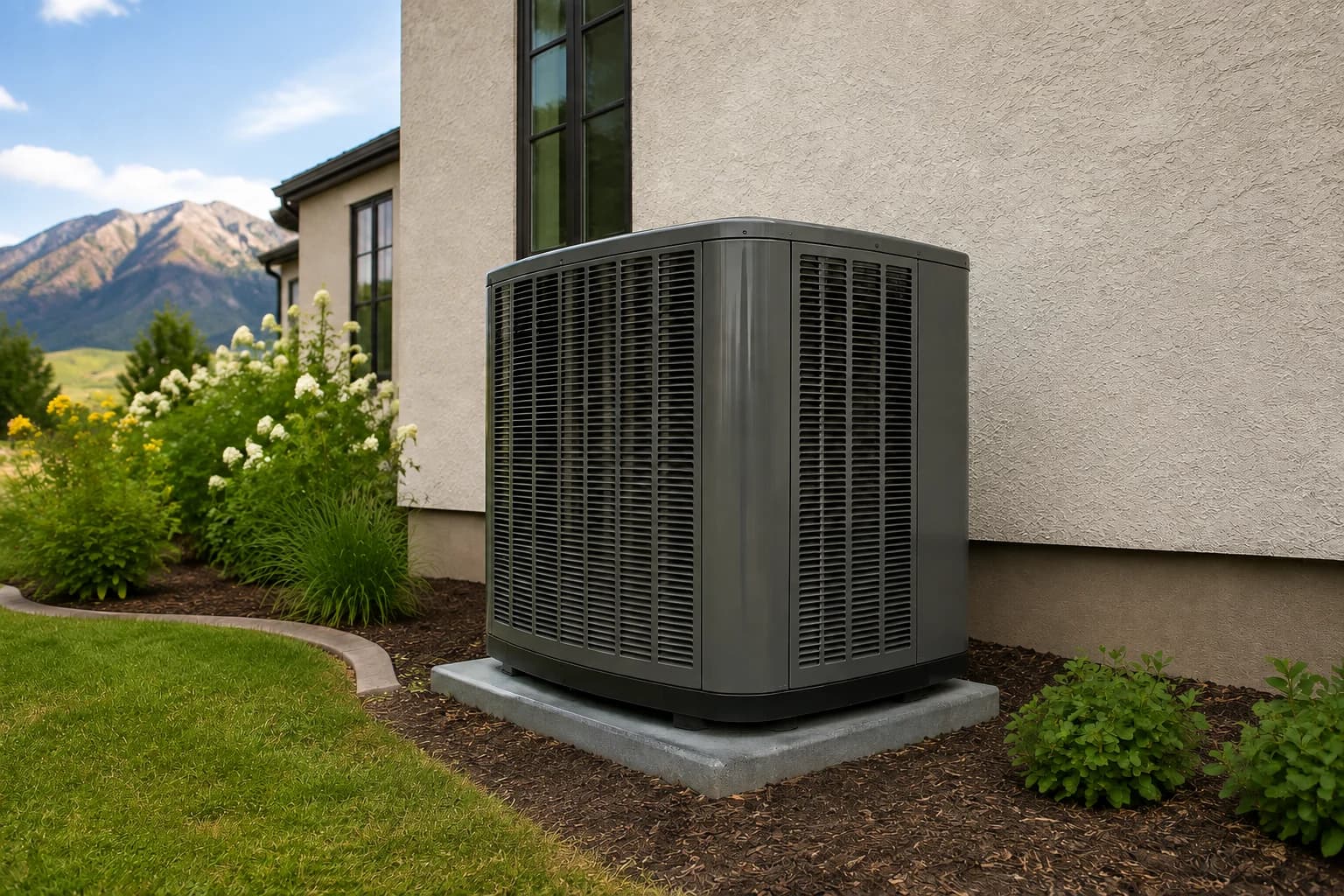
Amana air conditioner condenser beside a house in landscaping rock
5.0 ★
369 Google Reviews
Free
Service Call
Upfront
Fixed Pricing
Licensed
UT 12883822-5501

Year-Round Heat Pump Repair and Maintenance

A heat pump fault hides in twice as many places as an AC fault, because the machine runs in two modes: refrigeration, airflow, defrost controls, the reversing valve, sensors, auxiliary heat, and the duct system are all suspects. The first thing we do is reproduce the problem in the mode it happens — heating or cooling — then work the sequence with meters until the cause is named.

One honest note before you call: air from a heat pump in heating mode typically feels cooler at the registers than furnace air — warm, not hot — while still heating the home normally. 'Feels weak' is not a diagnosis, and we'll test delivered temperature before selling you a repair you don't need.

Diagnosed in the Mode It's Failing

  • Mode-tested first

    Heating complaints get diagnosed in heat, cooling complaints in cool — because the fault may only exist in one direction.

  • Defrost, explained

    We'll show you the difference between normal frost cycles and the abnormal icing that actually needs a repair.

  • Flat-rate repairs

    Options in writing before work starts, priced per job — same discipline as every other CMB visit.

  • Section 608 certified

    All refrigerant work performed by EPA Section 608 certified technicians.

When to Call About Your Heat Pump

Symptoms split by mode — the same machine misbehaving in two different seasons.

  • Cool air in heating mode

    Registers blowing cool-ish in winter can be normal heat-pump output — or a reversing valve, low charge, or aux that never engages. We measure instead of guessing.

  • Ice that won't clear

    Frost melting away on a timer is defrost working; a solid block that never clears is a fault in defrost, charge, or airflow.

  • Aux heat running constantly

    Backup heat that never shuts off is expensive — and usually a control, sensor, or balance-point problem rather than a broken machine.

  • Weak performance, either season

    Long run times and rooms that lag point at airflow, charge, or capacity — measured, not assumed.

What's Included in a Heat Pump Service Call

  • The complaint reproduced in the mode it happens — heat tested in heat, cool in cool
  • Full electrical testing: capacitors, contactors, motors, and control board
  • Reversing valve operation and sensor readings verified
  • Defrost controls observed through a cycle, not just eyeballed
  • Refrigerant pressures and temperature split measured and recorded
  • Auxiliary/backup heat operation and changeover settings checked
  • Airflow, filters, and both coils inspected
  • Findings explained with flat-rate options in writing before any work starts

How We Diagnose a Heat Pump

Twice the modes, twice the suspects — the sequence keeps it honest.

  1. Thermostat & mode

    We confirm the call, the mode, and the changeover logic at the thermostat before touching the equipment.

  2. Electrical components

    Capacitors, contactors, and motors tested under load in the failing mode — weak starts look different in heat than in cool.

  3. Reversing valve & sensors

    The valve that switches seasons and the thermistors that steer it get verified — stuck valves and drifting sensors mimic bigger failures.

  4. Defrost controls

    Frost is normal; a unit that can't clear it isn't. We watch the board, sensors, and timer behavior through an actual cycle.

  5. Refrigerant circuit

    Pressures and temperature split in the active mode tell us about charge and the compressor's real output.

  6. Auxiliary heat & ducts

    Backup strips or furnace staged correctly, and airflow measured — restricted ducts starve heat pumps faster than they starve furnaces.

Not sure which of these you're describing? Call (385) 865-6749 and we'll help you put it into words.

Twin AC compressors with tools on concrete.
The compressor works both directions in a heat pump — which is why electrical and refrigerant testing comes before any parts are sold.

What Drives the Cost of a Heat Pump Repair

Heat pump repairs range from a control-board sensor to sealed-system work — the diagnosis, not the symptom, sets the price.

  • Which subsystem failed

    Controls, sensors, and motors are routine repairs; reversing valves and compressors are significant ones. The meter decides which you have.

  • Season and mode

    A fault only present in heating mode may require a cold-morning visit to verify — worth it to fix the real problem once.

  • Control complexity

    Two-stage and variable systems have smarter boards and more settings; reprogramming after a repair is part of doing it right.

  • Age & refrigerant type

    Older refrigerant and discontinued parts change the repair-versus-replace conversation, and we'll have it with numbers.

Repairs are quoted flat-rate in writing before work begins, and the service call is free when we do the work. We don't publish a price list because the same symptom can end at a $part that costs ten dollars or a sealed-system job — and we'd rather show you the itemized quote than a range that fits neither.

How the Repair Runs

  1. Reproduce & diagnose

    Your complaint, replicated in the failing mode, then tested down the full sequence until the cause is named.

  2. Options in writing

    Flat-rate repair — and replacement comparison when the math is close — explained line by line before work starts.

  3. Repair

    Failed component replaced or repaired; controls and changeover settings restored to where they belong.

  4. Verify in both modes

    Delivered temperatures, pressures, and amp draws re-measured in heating AND cooling before we pack up.

Frost, Cold Snaps, and Dry Air

Utah winters are made for a specific heat-pump misunderstanding: on cold, humid-enough mornings the outdoor coil collects frost, the unit pauses heating to melt it, and a plume of steam rises off the unit while aux heat covers the gap. To a homeowner that's an alarming noise-and-smoke moment; to a technician it's the defrost cycle working exactly as designed. Abnormal icing — ice that never clears, or builds on one side — is the version that needs a visit.

  • Steam rising off the outdoor unit during heating: normal defrost, not smoke
  • Dry air most of the season means less frost than humid climates — but inversions bring cold, damp spells that multiply defrost cycles
  • Twice-a-year service matches the machine: cooling check in spring, heating-and-defrost check in fall

Heat-Pump Parts and What They Do

The vocabulary from your quote or invoice, explained — and the anchors for the symptoms above.

Reversing Valve

The component that decides whether the system heats or cools by redirecting refrigerant flow. A valve stuck in one position turns your heat pump into a very committed air conditioner (or vice versa); one that won't shift reliably causes mode-switching failures. Diagnosis is by measured pressure differential, not by tapping the unit — the old 'give it a whack' trick masks the problem for a week.

Defrost Controls

Sensors, timer, and board logic that periodically reverse the system to melt frost off the outdoor coil. Normal defrost runs a few minutes, a few times a day in frosty weather, with steam rising off the unit. When sensors drift or the board logic fails, defrost runs too often (cold air at the registers, high bills) or never (a coil that ices into a block). We watch a full cycle before condemning any of the three.

Auxiliary (Backup) Heat

Electric strips — or your furnace in a dual-fuel setup — that supplement the heat pump in deep cold or recovery periods. It's supposed to run in bursts; running all day usually means a control or balance-point problem, a failed sensor, or a thermostat mode nobody chose on purpose. We test the staging end-to-end and reset the changeover logic, because aux heat running unchecked is the most expensive way to heat a Utah home.

Refrigerant Circuit

The sealed loop that actually moves heat — in both directions. Low charge from a leak shows up as weak performance and abnormal icing in heating mode, not just weak cooling. Repairs start with finding the leak; topping off without repairing it is money spent twice, same as on any refrigerant system.

Answers Before You Book

Why is my heat pump blowing cool air in heat mode?
First, the honest possibility: heat-pump supply air typically measures in the 90s Fahrenheit at the registers — warm, but nothing like the 120°+ blast of a gas furnace, so it can 'feel' cool against skin while heating the home perfectly well. We measure delivered temperature first. If output genuinely is low, the usual causes are a reversing valve that hasn't fully shifted, low refrigerant charge, a defrost cycle running long, or auxiliary heat that never engages. Each has a different fix, and the meters tell them apart in one visit.
Why is the outdoor unit covered in ice?
Some ice is the machine working: in heating mode the outdoor coil runs cold, collects frost on damp days, and periodically reverses to melt it off — you'll see steam and hear the fan stop. That's defrost, and it's fine. A unit iced into a solid block, iced on one side only, or running with ice for hours on end is the abnormal version — usually defrost controls, low charge, or restricted airflow across the coil. Turn it to emergency heat if your thermostat has it, give it a few hours to thaw, and book a visit.
Why is auxiliary heat running?
Aux heat legitimately runs during deep cold, big thermostat setbacks (recovering from a workday schedule), or defrost cycles. What it shouldn't do is run all day when it's mild outside. The usual culprits: a balance point set wrong, a failed outdoor sensor, a thermostat in emergency-heat mode by accident, or a heat-pump fault the aux is silently covering for. Because strip heat costs notably more to run, 'aux running constantly' is worth a diagnostic call in its own right — it's often a small control fix.
How often does a heat pump need service?
Twice a year is the honest answer for Wasatch Front homes: a cooling-mode check in spring and a heating-and-defrost check in fall. The machine runs twelve months a year here — there's no off-season for wear to hide in. Between visits, rinse the outdoor coil when cottonwood and dust load it up and keep a foot of clearance around the unit. Members get both visits scheduled automatically, ahead of the season rush.
Can CMB repair ductless heat pumps?
Yes — ductless mini-splits are heat pumps, and we service them with the same mode-tested diagnostic sequence: refrigerant circuit, sensors, defrost behavior, and the wall unit's own electronics. Weak performance in a ductless unit is most often charge, a drifting sensor, or filters and coils that need real cleaning rather than a quick dust. We repair and maintain the same brands we install, and quote everything flat-rate before work starts.

Get the Real Diagnosis — Both Modes Tested

Book online or call. We'll reproduce the fault in the mode it happens, explain it in plain English, and quote the fix flat-rate.