
Indoor Air Quality
Indoor Air Quality Solutions Based on the Actual Problem
There is no single device that fixes every indoor-air concern. CMB HVAC starts by identifying the likely source, ventilation condition, humidity, filtration limits, and HVAC compatibility, then recommends only the measures that fit the problem.
- 5.0 ★
- 370 Google Reviews
- Licensed
- UT 12883822-5501
- Free
- Service Call
- Upfront
- Fixed Pricing
Indoor Air Quality Solutions Based on the Actual Problem
Dust, dryness, odors, condensation, and stale air each have different causes, and the indoor-air aisle is full of products that answer questions your house isn't asking. The work starts upstream of any purchase: where the particles come from, whether the home is tight or leaky, what the humidity actually does across Utah's seasons, and what your blower and ducts can support. Then — and only then — a recommendation.
One boundary we keep: HVAC accessories are not medicine. Filtration reduces particles; humidifiers add measured moisture; ventilation exchanges air. None of them cures symptoms, and none of them fixes a moisture problem — a dehumidifying afterthought can't out-run a wet crawlspace. When the honest answer is source control or a specialist (mold, radon, asbestos), we say so and point you the right direction.
Air Quality Advice You Can Audit
The problem first
Source, ventilation, humidity, and filtration limits identified before any product is recommended — the order that avoids expensive guesses.
Compatibility decides
Blower capacity and duct static measured against any upgrade — the best-rated filter is wrong for a system it suffocates.
Limits stated plainly
What each measure reduces, what it ignores, and its maintenance costs — in writing, before you buy.
Referrals when honest
Mold, radon, and asbestos belong to specialists. We test inside our lane and tell you when you need someone else's.
Indoor Air Quality — What We Do
Air Purification & Filtration
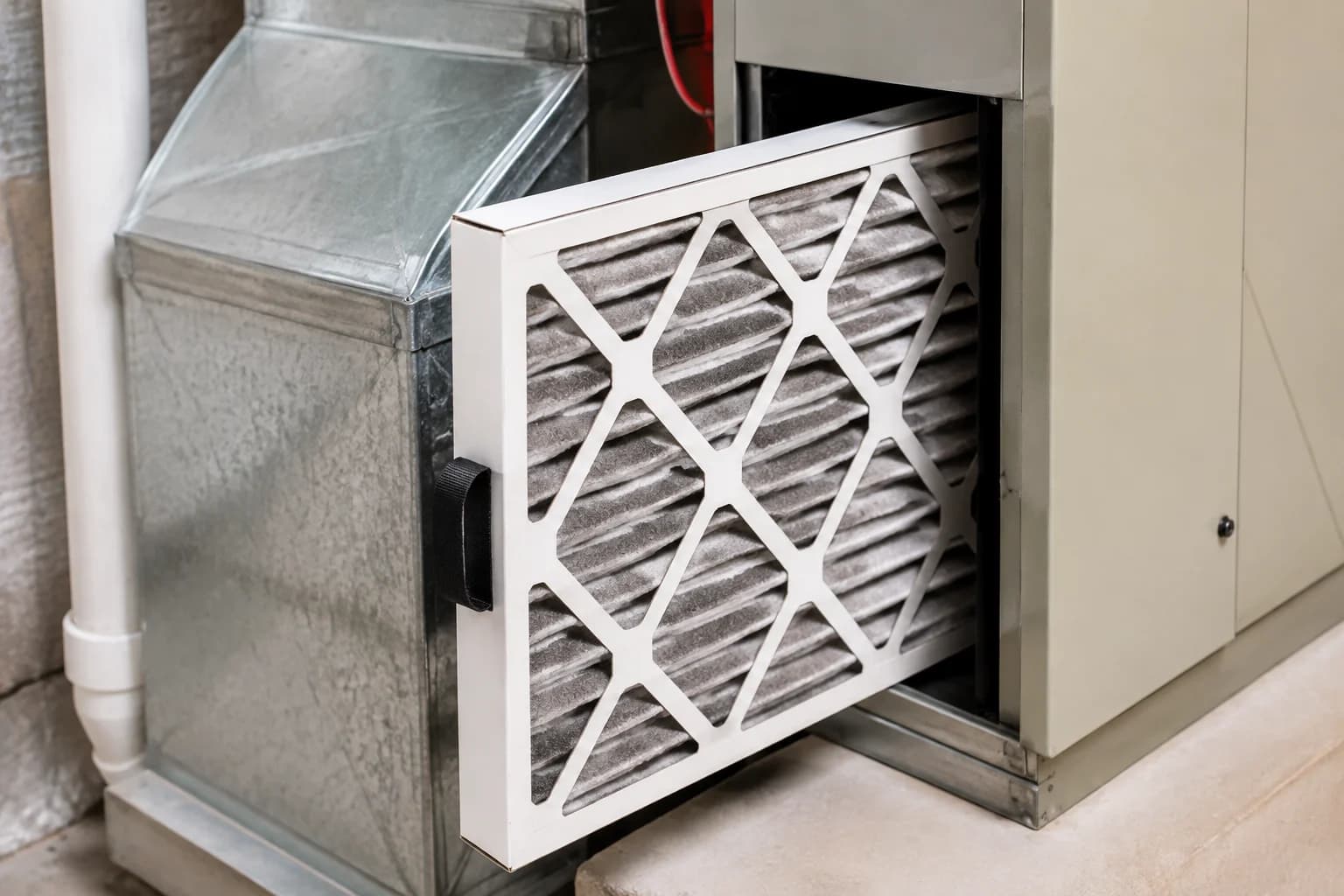
Filters, media cabinets, and purification selected for the pollutant and the blower — with maintenance costs spelled out.
Learn moreWhole-Home Humidifiers
Controlled winter humidity for dry Utah homes — sized, drained, and set so condensation never becomes the second problem.
Learn moreIAQ & CO Testing
Targeted measurements with the method and limits stated — plus the CO protocol that starts outside the house.
Learn moreVentilation Systems
Fresh air without pressure or moisture problems — exhaust, supply, and balanced approaches evaluated for the home.
Learn more
Indoor Air Quality Questions, Answered
What is the best way to improve indoor air quality?
Will a better filter restrict airflow?
Can an air purifier remove every pollutant?
Do you test for mold or radon?
What indoor humidity level should I target?
Connect With Us For Your Free In-home Consultation!
Solve the Air Problem You Actually Have
Book online or call. Source, ventilation, humidity, and filtration evaluated — then a recommendation that fits both the house and the blower.