
Skip to content

Davis & Salt Lake County

CMB HVAC — Utah's Local HVAC

Air Purification & Filtration

Air Cleaning Selected for the Pollutant and HVAC System

Filters and air cleaners differ in what they capture, how much airflow resistance they add, and how they must be maintained. CMB HVAC evaluates the concern and the equipment before recommending a compatible filtration, purification, or UV option.

CMB HVAC technician working on a home furnace — certified, locally owned
5.0 ★
369 Google Reviews
Free
Service Call
Upfront
Fixed Pricing
Licensed
UT 12883822-5501

Air Cleaning Selected for the Pollutant and HVAC System

Start with what you're actually cleaning: particles (dust, pollen, dander) behave differently than gases and odors, and no single technology does both well. Then the physics every buyer skips: air only gets cleaned when it passes through the cleaner, the cleaner adds resistance the blower must overcome, and the whole arrangement has maintenance costs that outlast the purchase. A recommendation that ignores any of those three is a brochure, not advice.

Our selection policy is boring on purpose: match the technology to the measured problem, respect the blower's limits, prefer products whose claims match their manufacturer's data, and never install anything that makes ozone its selling point. Source control and ventilation stay on the table throughout — a purifier running next to an open mold source is a subscription to the problem.

Filtration Chosen With Numbers

  • Pressure drop checked

    Static pressure measured before and after the recommendation — the filter your blower can actually carry.

  • Maintenance priced honestly

    Filter, cell, and lamp replacement intervals and costs stated up front — no surprise consumables.

  • No ozone marketing

    We don't sell devices whose headline feature is producing ozone. That's a policy, not a preference.

  • Limits in writing

    What the selected system reduces, what it doesn't touch, and where source control still owns the problem.

When to Look at Filtration & Purification

Each concern points at a different technology — the anchors explain the options.

What a Filtration Visit Includes

  • The concern defined: particles, odors, biological growth, or a mix
  • Blower capacity and duct static pressure measured
  • Current filter arrangement inspected — rack, size, seal, and condition
  • Technology options matched to the pollutant, with performance data cited
  • Maintenance schedule and consumable costs per manufacturer guidance
  • Installation, sealing, and airflow verification after the upgrade
  • Source-control and ventilation observations where they matter

How We Match a Cleaner to Your System

  1. Name the pollutant

    Particles, gases/odors, or biological growth behave differently — the concern decides the technology, not the shelf.

  2. Measure the air side

    Static pressure and blower capability — the ceiling every filtration choice has to live under.

  3. Review the filter path

    Rack condition, bypass gaps, and filter area — a leaky rack returns the unfiltered air straight to the coil.

  4. Compare real options

    MERV, media area, pressure drop, and maintenance intervals — the trade-offs priced in time and consumables, not just dollars.

  5. Install & verify

    Cabinet sealed, airflow re-measured, and the improvement checked against the numbers taken before the work.

Filtration, Purification, or UV

Different tools for different pollutants — and different maintenance lives.

  • Media filter cabinet

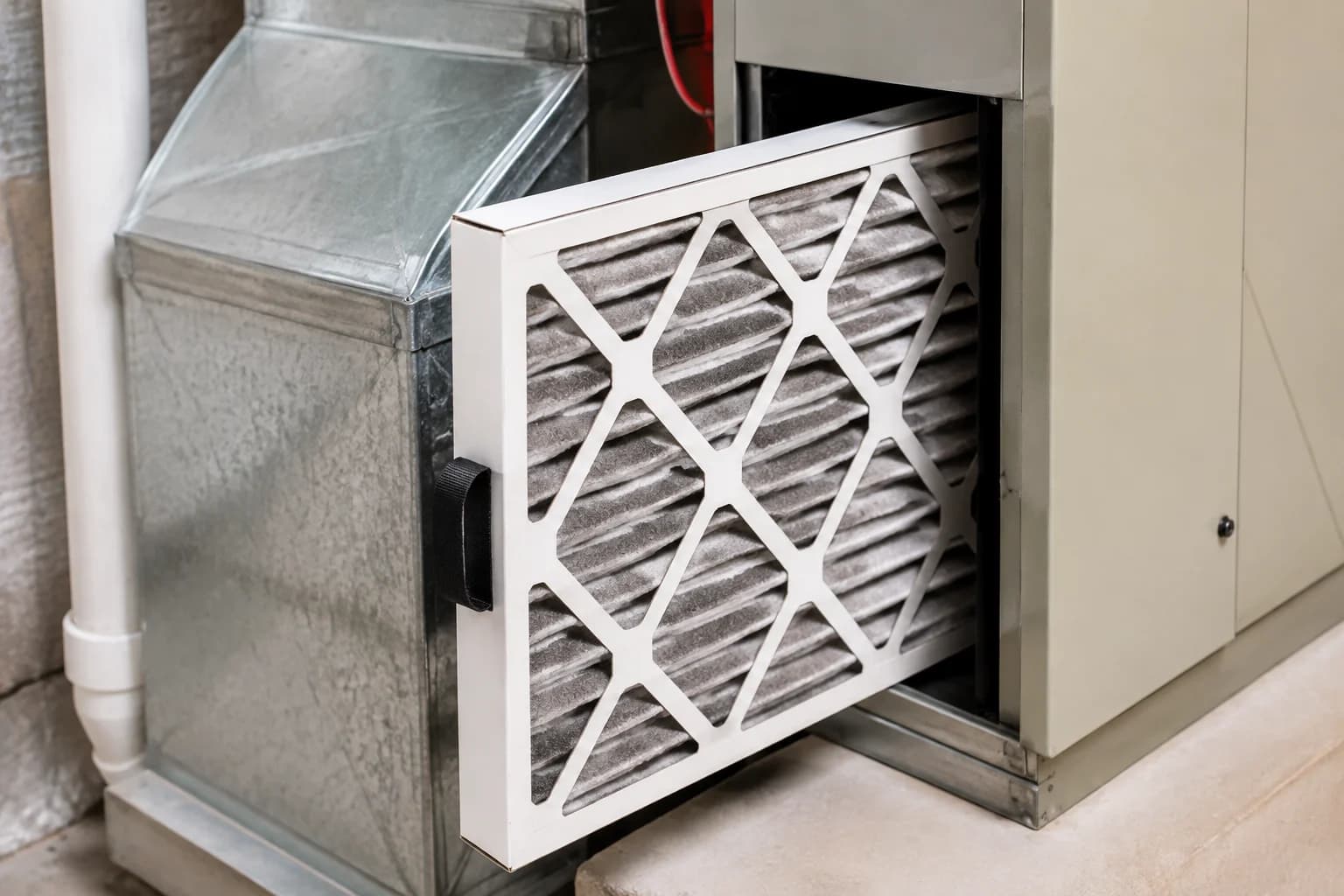
    A four-to-five-inch deep-pleat filter in a sealed cabinet: far more media area than a one-inch filter, so it catches more while breathing easier — and needs changing a few times a year, not monthly.

    Best for: dust and particle concerns on most forced-air systems

  • Whole-home purification

    HVAC-integrated cleaners that treat circulated air beyond plain filtration. We fit models whose manufacturer data supports their claims — and we'll tell you what each one doesn't do.

    Best for: particle concerns beyond what filtration alone addresses

  • UV coil treatment

    Lamps aimed at the evaporator coil and drain pan, where darkness and moisture invite growth. A targeted supplement — it doesn't replace the filter, the moisture fix, or ventilation.

    Best for: coil-side biological growth with the moisture source addressed

What Drives Filtration Costs

The purchase price is the small half. The honest quote includes the consumable schedule next to it.

  • Cabinet vs. rack

    A media cabinet is a bigger up-front install than a one-inch rack — and spends its savings on fewer, cheaper filter changes.

  • Technology & consumables

    Filters, cells, and lamps each have their own replacement interval and cost — we state them per manufacturer guidance, not as a universal schedule.

  • Installation access

    Adding a cabinet means duct access and a sealed fit; a packed mechanical room or finished-wall return changes the scope.

  • Airflow work

    If the measurement shows your system is already near its limit, the right scope includes blower or duct adjustments — quoted as their own line.

Filtration upgrades are quoted flat-rate with the consumable schedule printed beside them. We don't promise allergy relief, illness prevention, or a percentage of 'cleaner air' — we match technology to pollutant, cite the manufacturer's own performance data, and let you decide with the limits in writing.

How a Filtration Project Runs

  1. Evaluate

    The concern named, static pressure measured, filter path inspected — the recommendation's foundation.

  2. Quote in writing

    Technology options with performance data, maintenance intervals, and consumable costs. Flat-rate.

  3. Install

    Cabinet or unit set and sealed, wiring and controls per manufacturer, home protected throughout.

  4. Verify & schedule

    Airflow re-measured against the before-numbers, replacement intervals put on your calendar, questions answered.

The Filtration Vocabulary

The terms from your quote, explained — and the anchors for the concerns above.

MERV, Media Area & Pressure Drop

MERV describes what a filter captures, not what it costs your blower to breathe. The two numbers that matter together: capture rating and pressure drop — and the tiebreaker is media area, which is why a deep four-to-five-inch media filter can out-filter a one-inch while adding less resistance. The highest-MERV filter your shelf sells is often the wrong filter for your system; the right one is the most filtration your measured airflow margin can carry, in a cabinet that seals.

UV's Appropriate Role

Ultraviolet lamps have one honest job in a home HVAC system: suppressing biological growth on the evaporator coil and drain pan, where darkness and moisture otherwise give it a home. That's it. UV does not replace filtration (it catches no dust), does not fix the moisture problem that fed the growth, and does not make the air you breathe sterile. Lamps also age — output declines long before the light dies — so the lamp gets replaced on the manufacturer's schedule, not when it stops glowing.

Choosing Technology & the Ozone Line

Our selection rules: the manufacturer's own data has to support the claim; the device has to fit your blower's airflow budget; and its maintenance has to be something you'll actually do. One line we don't cross: we don't sell ozone-generating air cleaners. Ozone is a lung irritant, devices marketed on it don't clean the way their brochures say, and no pollutant in a Utah home needs it. If a product you're eyeing leads with ozone, the honest advice is to put it back.

Before You Buy Another Filter

What MERV filter can my system handle?
The measurement decides, not the chart on the shelf. We measure static pressure with your current filter in place, compare it to the blower's rated budget, and the remaining margin is what a filter upgrade can spend. Deep-pleat media filters usually spend it best — more capture with less added resistance — while a dense one-inch filter can push an already-tight system over the edge. Some systems take a high-MERV media cabinet without breaking a sweat; others need blower or duct work first. The visit tells you which, with numbers.
What is the difference between filtration and purification?
Filtration is mechanical: air passes through a media that catches particles, and its effectiveness is a function of the media and how much air moves through it. Purification is a broader category — HVAC-integrated devices that treat air by other means, each with its own target and its own maintenance. Neither is a category to shop by; the pollutant picks the technology. Particles (dust, pollen, dander) are filtration's home turf; biological growth on coils is UV's narrow lane; odors and gases are the hardest, and any product claiming to handle everything is claiming past its evidence.
Does UV replace a filter?
No — they do different jobs entirely. UV's realistic role is suppressing biological growth on the coil and drain pan; it doesn't capture dust, pollen, or anything else moving past it in the air. Your filter keeps particles out of the blower and coil; UV keeps the coil's wet surfaces from becoming a biology experiment. Homes do best with both when coil growth is the concern, plus an honest look at the moisture or drainage condition that fed the growth — because UV on a wet, neglected coil is maintenance delay, not a fix.
Can an air cleaner remove odors?
Odors are gases, and gases are the hardest thing in the whole category — standard filters don't catch them, and most particle-focused purifiers only make the air smell briefly different while passing the gas through. Gas-phase reduction needs adsorbent media (activated carbon being the common one), and it consumes itself as it works, so the media needs replacing on a schedule. The bigger lever stays source control: find what's making the smell, fix that, and the air cleaner becomes a backup instead of a lifestyle.
How often do filters or lamps need replacement?
By manufacturer guidance and your actual conditions — not one universal schedule. One-inch filters might need monthly changes in a dusty month and last longer otherwise; a four-inch media filter typically runs months between changes; UV lamps decline on the manufacturer's clock whether or not they still glow. What we give you is the specific interval for the specific product we install, adjusted for what your household's dust and runtime actually do — and the honest advice that checking monthly beats trusting any calendar.

Get Filtration That Fits Your Blower

Book online or call. The pollutant named, the airflow measured, and the trade-offs priced in writing.