
Skip to content

Davis & Salt Lake County

CMB HVAC — Utah's Local HVAC

Heat Pump Installation & Replacement

Heat Pump Systems Sized for Comfort in Every Season

Heat-pump selection requires more than an efficiency label. CMB HVAC evaluates heating and cooling loads, low-temperature capacity, ducts, electrical service, backup heat, controls, and operating-cost assumptions before presenting system options.

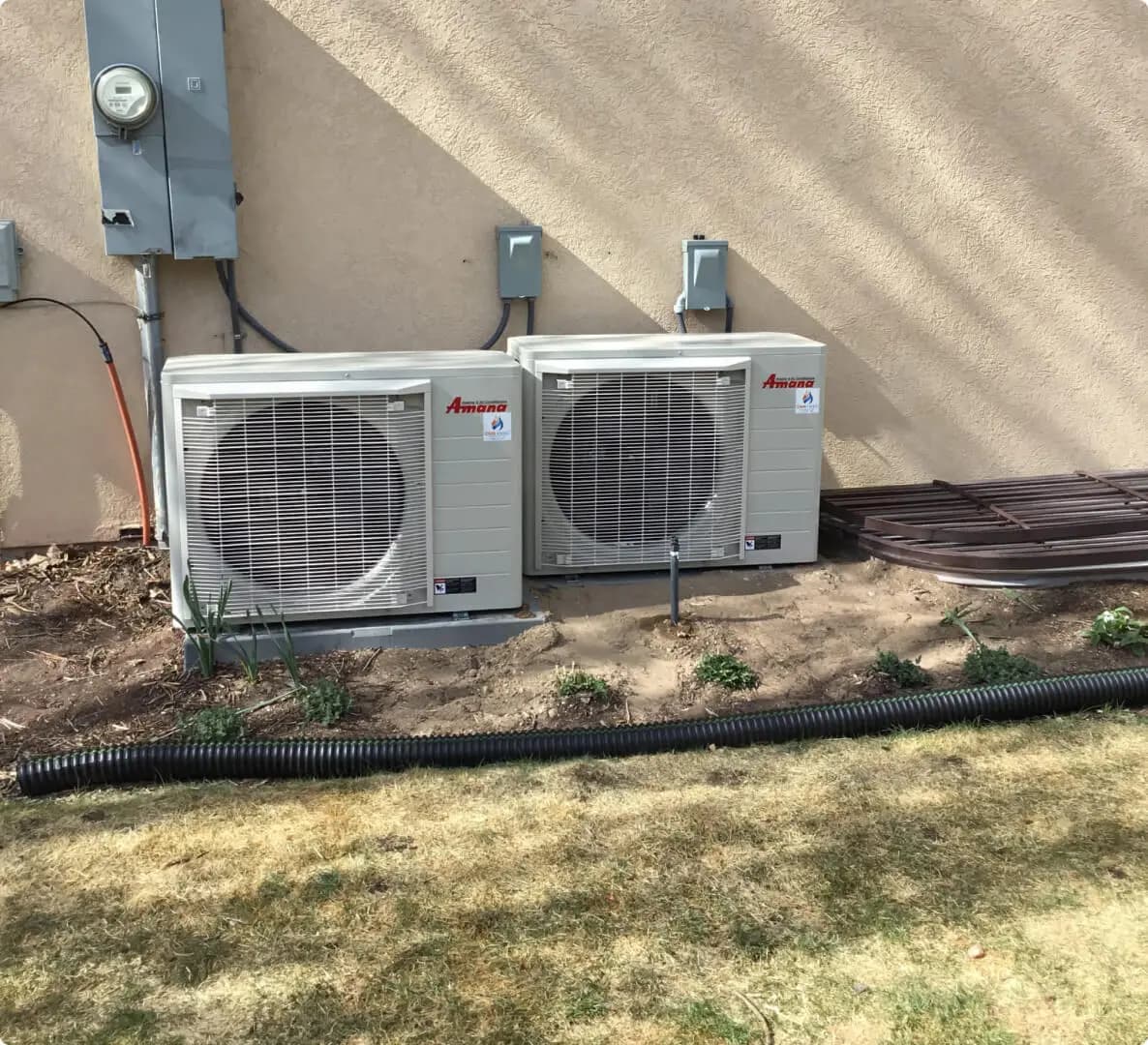
Outdoor central air conditioning unit beside a house
Upfront
Fixed Pricing
5.0 ★
369 Google Reviews
Licensed
UT 12883822-5501
Free
Service Call

Heat Pump Systems Sized for Comfort in Every Season

A heat pump has to win twice — cooling your home in August and heating it in January — so selection starts with two load calculations, not one, and ends with equipment whose published heating capacity at Utah's design temperature still covers the job. The efficiency label is a tiebreaker between properly sized options, never the decision itself.

Then the configuration question: all-electric (heat pump plus air handler) or dual-fuel (heat pump plus your furnace, each running when it's the cheaper heat). We quote both with model-specific performance data, verify ducts and electrical service, and commission the install with the numbers written down.

The Numbers a Quality Heat-Pump Install Leaves Behind

  • Two-season load calc

    Cooling and heating loads calculated separately on your actual home — shared with the quote, not filed away.

  • Low-temp capacity verified

    We check the model's published heating output at Utah's design temperature — the number that matters at 7 a.m. in January.

  • Controls configured, not defaulted

    Balance point, aux lockout, and changeover settings set on site and explained — the difference between efficient and expensive.

  • Commissioning sheet

    Charge, airflow, and temperatures recorded at startup in both modes and left with the homeowner.

When a Heat-Pump Quote Makes Sense

None of these is an automatic verdict — each is a moment when comparing configurations costs you nothing but an hour.

  • The AC is at end of life

    When the air conditioner side is done anyway, the question 'heat pump instead of straight AC?' costs nothing to ask — and the answer is often yes.

  • Furnace AND AC both aging

    Two aging systems are two replacement quotes waiting. A single heat pump — or a coordinated dual-fuel pair — is one project with one set of permits.

  • Electric rates and all-electric goals

    Homes moving off gas, or with solar, get a real look at all-electric. We'll model it honestly against the dual-fuel alternative.

  • The current heat pump underperforms

    A heat pump that can't hold the house in winter may be undersized, mis-controlled, or simply a low-temp disappointment — worth a capacity check before a replacement.

What a CMB Heat-Pump Installation Includes

  • Manual J load calculation for both cooling and heating, shared with the quote
  • All-electric and dual-fuel options compared with model-specific performance data
  • AHRI-matched indoor/outdoor equipment at two or three tiers, flat-rate
  • Duct capacity, electrical service, and condensate verified before ordering
  • Backup heat strategy and balance point configured on site
  • All mechanical permitting and inspection scheduling
  • Evacuation to spec, charge by measured weight, startup tested in BOTH modes
  • Thermostat setup, controls walkthrough, warranty registration, commissioning sheet

How We Size and Specify a Heat Pump

  1. Two load calculations

    Cooling load for August, heating load for January. The heating number is the one that sizes a heat pump along the Wasatch Front.

  2. Capacity at design temperature

    Candidate models checked for published output at our design temperature — not their peak rating at mild temperatures.

  3. Duct & airflow survey

    Heat pumps need their airflow more than furnaces do; the ducts get measured, and corrections quoted plainly if they're needed.

  4. Electrical & backup review

    Panel capacity checked for all-electric; furnace compatibility checked for dual-fuel. Both configurations priced where relevant.

  5. Controls plan

    Balance point, aux lockout, and staging decided on the quote visit — so the system runs the way it was designed to from day one.

All-Electric or Dual-Fuel

The right answer depends on your heating load, your rates, and your risk tolerance on the coldest nights. Both are quoted with real numbers.

  • All-electric heat pump

    One system does everything: the heat pump heats and cools, an air handler moves the air, and electric strips cover the deepest cold. No gas line, no combustion.

    Best for: homes with (or adding) solar, tighter envelopes, milder microclimates

  • Dual-fuel heat pump + furnace

    The heat pump handles the long shoulder seasons efficiently; the furnace takes over below a set outdoor temperature. Each heat source runs when it's the cheaper one.

    Best for: Utah winters, existing gas service, whole-home comfort at design conditions

  • Straight AC + furnace

    The conventional pairing — and still the right answer for some homes. When the heating story doesn't favor a heat pump, we'll say so and quote the conventional route too.

    Best for: homes where the numbers genuinely favor separate systems

Technician servicing outdoor HVAC unit
Line sets, condensate, and electrical verified before equipment is ordered — installation conditions drive heat-pump performance.

What Drives the Price of a Heat-Pump System

Two homes on the same street can quote very differently and both be right. Here's what moves the number.

  • Configuration

    All-electric (with an air handler) and dual-fuel (with a furnace) are different scopes — one may reuse existing equipment the other can't.

  • Cold-climate tier

    Units that hold capacity at low temperatures cost more than mild-climate units. We'll show you both numbers and what the difference buys in January.

  • Ducts & electrical

    Airflow corrections, panel work, or a new circuit join the scope when the survey finds them — quoted plainly, never discovered mid-install.

  • Controls & backup

    Smart thermostat staging, outdoor sensors, and aux configuration are part of doing it right; we include and price them rather than skipping them.

Every system is quoted flat-rate on one page after the load calculation — equipment, materials, permits, and labor itemized. Incentives and rebates change by season, program, and equipment tier: we verify what currently applies to your specific project and list it on the quote as its own line, dated, rather than quoting a blanket promise. We don't publish savings percentages, because real savings depend on your home, your rates, and the equipment you choose.

How a CMB Heat-Pump Install Runs

  1. Quote visit

    Both load calcs, duct and electrical checks, all-electric vs dual-fuel comparison — flat-rate options on one page.

  2. Install day

    Protection down, old equipment out, new system set, line sets brazed under nitrogen, permit work to spec.

  3. Commission in both modes

    Evacuated and charged to spec, then started in cooling AND heating — airflow, temperatures, and pressures recorded on the sheet you keep.

  4. Controls & walkthrough

    Balance point and aux staging set, thermostat taught, warranty registered, and every setting explained before we leave.

What Utah Demands From a Heat Pump

The Wasatch Front sits in the band where heat-pump decisions get genuinely interesting: our summers are easy cooling work, but our winter design temperatures are cold enough that low-temperature capacity — not the efficiency label — decides whether an all-electric system carries the house. That's why every CMB heat-pump quote checks published heating output at our actual design temperature, and why dual-fuel remains a favorite here: the heat pump runs the long mild seasons, the furnace owns the inversions.

  • Heating load sizes the system here; cooling almost never governs in this climate
  • Big day-night swings reward staged equipment that can run low and long
  • Balance point is set per house — panel capacity, rates, and envelope all move it

How the Decisions Actually Work

The two concepts every heat-pump owner should be able to explain to their neighbor.

Dual Fuel, Explained

A dual-fuel system pairs the heat pump with a gas furnace and lets a control strategy pick the heat source. Above an outdoor temperature you choose — the balance point — the heat pump runs, because moving existing heat is cheaper than burning gas below its efficiency crossover. Below it, the furnace takes over. We set the changeover from your load calculation, your utility rates, and your panel capacity, then verify staging in both directions at startup. Savings depend on the equipment, the weather, and the rates; that's why we configure it to your house instead of promising a percentage.

Balance Point & Aux Lockout

The balance point is the outdoor temperature where the heat pump's output exactly matches the home's heat loss — below it, backup heat contributes. Set too high, the system leans on expensive aux heat during weather the heat pump could handle; set too low, the house loses ground on cold mornings. Aux lockout settings decide when strips or the furnace may stage in. These are the settings that separate a well-tuned heat pump from an expensive one, and they're configured on site — never left at factory defaults.

The Questions Every Homeowner Asks

What size heat pump does my home need?
Whatever the load calculations say — cooling and heating done separately, on your actual home, with its orientation, glazing, insulation, and leakage. Sizing off the old unit's label or a square-foot rule is how homes end up with heat pumps that can't hold January. Because a heat pump's heating output falls with outdoor temperature, we size against the model's published capacity at our design temperature, so the number that matters is the one it delivers on a cold morning, not the one on the box.
Do I need a furnace or electric backup?
Some backup strategy, yes — either electric strips in the air handler (all-electric) or your furnace (dual-fuel). Backup covers the deepest cold and defrost cycles. Which one suits you depends on your heating load, panel capacity, gas service, and rates. All-electric is cleaner and pairs well with solar; dual-fuel is the confidence pick for Wasatch Front winters because the furnace side never notices the temperature. We quote both where they're plausible and tell you where each wins.
How does dual fuel decide which heat source runs?
A control strategy with one main setting: the balance point — the outdoor temperature below which the furnace takes over. Above it, the heat pump runs alone; below it, the furnace carries the heat (with the heat pump locked out or assisting, depending on setup). We set it from your load calculation and utility rates rather than a generic default, and the thermostat shows you which source is running. Done right, the switch is invisible except on your bill.
Will a heat pump lower my bills?
Honestly: usually, but not guaranteed, and never by a fixed percentage we'd print on a website. Heat pumps deliver more heat per unit of energy than strip heat or older gas equipment across most of our season, so replacing electric resistance or aging AC-plus-furnace setups often cuts operating costs meaningfully. But savings depend on your rates, your envelope, the equipment chosen, and the control settings. We'll walk a realistic comparison for your house during the quote — with assumptions you can question.
Do I need duct or electrical upgrades?
The survey answers this before anything is ordered. Heat pumps are sensitive to airflow, so ducts get measured — some homes pass as-is, some need specific runs corrected. Electrically, all-electric systems need appropriate circuits and, in older homes, sometimes panel headroom; dual-fuel usually reuses the existing electrical picture. If upgrades belong in the scope, they're line items on the quote — never a surprise discovered on install day.

Compare All-Electric and Dual-Fuel With Real Numbers

Two load calculations, verified low-temperature capacity, and every option priced on one page. Free to quote, no obligation.