
Skip to content

Davis & Salt Lake County

CMB HVAC — Utah's Local HVAC

Flush & Expansion Tanks

Water Heater Maintenance and Thermal Expansion Control

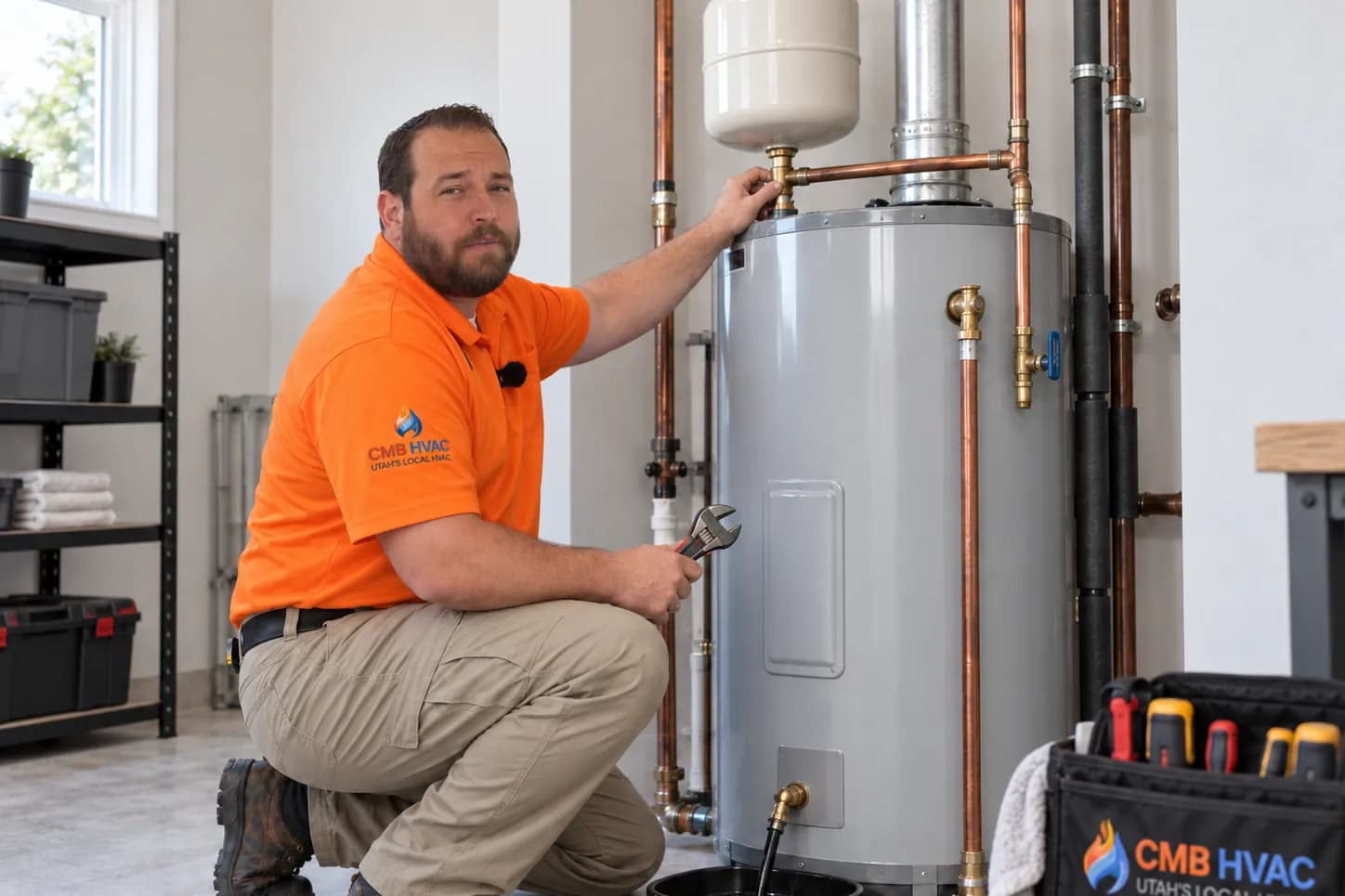
Sediment, scale, pressure, and thermal expansion affect water heaters differently depending on water quality, appliance type, plumbing, and manufacturer instructions. CMB HVAC evaluates the system before recommending a flush, tankless descaling, or expansion-tank work.

Plumber sealing a pipe joint with a wrench
5.0 ★
369 Google Reviews
Free
Service Call
Upfront
Fixed Pricing
Licensed
UT 12883822-5501

Water Heater Maintenance and Thermal Expansion Control

Water-heater maintenance is a condition question, not a calendar one: how hard the water is, how hard the unit works, what the manufacturer's procedure says, and what the unit's inspection finds. In this region the sediment is real and the scale is fast — but 'flush every tank every year' is a slogan, not a procedure. We inspect first, explain what the unit's condition calls for, and follow the manufacturer's method where flushing or descaling is genuinely useful.

One inspection finding deserves its own warning: an old, neglected tank can be kept alive by sediment — and flushing it can reveal leaks the crust was sealing. When that's the honest risk, we say so before touching it, because turning a quiet gurgle into an active leak with a hose is a disservice. And the relief valve gets said every time: a dripping T&P is a symptom to diagnose, never a discharge to cap.

How This Service Works

  • Inspected before flushed

    The unit's age and condition checked first — the honest conversation about what flushing will and won't help.

  • Manufacturer's procedure

    Flush and descale methods followed per the appliance's instructions — not one hose-and-hope ritual for every unit.

  • Expansion done right

    Thermal expansion confirmed as the problem before a tank is sold — then sized, precharged, and supported properly.

  • Findings in writing

    Corrosion, leakage, failing valves, and needed work documented — the service report is the deliverable.

When to Schedule This Work

Each symptom points at sediment, scale, or pressure — the anchors explain each fix.

What Flush & Expansion Service Includes

  • Unit inspection: age, condition, connections, and evidence of corrosion or leakage
  • Honest flush-versus-replace conversation where condition makes it one
  • Tank flush per manufacturer procedure, where condition allows
  • Tankless descaling per the manufacturer's specific process, where fitted
  • Relief valve and discharge piping inspected and tested where appropriate
  • System pressure measured; closed-system and thermal-expansion check
  • Expansion tank checked: size, precharge, support, and condition
  • Written findings: what was serviced, what was found, what's worth planning for

How the Service Visit Runs

  1. Read the unit

    Age, condition, and connections inspected — including the honest question of whether an old tank should be flushed at all.

  2. Check the water side

    System pressure measured, expansion control checked, closed-system status confirmed — the pressure story first.

  3. Service what's serviceable

    Flush or descale per the manufacturer's method; valves and connections inspected and exercised.

  4. Test the safety chain

    Relief valve and discharge pathway checked — symptoms diagnosed at the source, never plugged at the pipe.

  5. Report & plan

    Findings written down: what was done, what was found, and what's worth scheduling before it becomes a Saturday.

Flush, Descale, or Expansion Work

Three different services for three different symptoms — the inspection picks which yours is.

  • Tank flush

    Loose sediment drained from the tank per the manufacturer's method — quieter operation and real efficiency on units whose condition says it will help.

    Best for: tanks with sediment symptoms and sound condition

  • Tankless descaling

    The manufacturer-specific descale procedure through the unit's service valves — restoring flow and temperature stability scale has stolen.

    Best for: on-demand units on a maintenance schedule

  • Expansion tank service

    Sizing, precharge to your home's pressure, support, and replacement — the pressure-side fix behind most weeping relief valves.

    Best for: closed plumbing systems and dripping T&P valves

Water softener and treatment equipment in a utility room
Water quality is the root of most tank symptoms — treatment and maintenance are the same conversation here.

What Shapes the Service Cost

Condition-based means the inspection leads the quote — the service follows what the unit actually needs.

  • Which service the unit needs

    A flush, a descale, and expansion work are different jobs with different materials — the inspection names yours.

  • Unit age and condition

    Neglected units carry the risk conversation — and sometimes the honest recommendation is replacement planning, not a flush.

  • Accessibility

    Tankless units without service valves need them added before descaling can ever happen — a real, one-time scope.

  • Water treatment status

    Homes with treatment need service less often; homes without it, more — the schedule follows the water, not a calendar.

Service visits are quoted flat-rate before work starts, findings included in writing. We don't publish an 'annual flush' as a universal rule — frequency follows the manufacturer, the water, the usage, and the unit's condition. And no service on any unit ends with a capped or plugged relief discharge, ever.

How the Visit Runs

  1. Inspect & advise

    Condition read, risks named — including the honest flush-or-replace conversation where it belongs.

  2. Service

    Flush or descale per the manufacturer's method; pressure and expansion control checked and corrected.

  3. Test the safety chain

    Relief valve and discharge inspected; expansion tank precharge verified against the home's pressure.

  4. Report

    Findings and future schedule in writing — including anything worth planning before it becomes urgent.

The Water Makes the Rules

Utah's hard water is the reason this page exists: dissolved minerals plate out on every heated surface, so tanks collect sediment at the bottom and tankless exchangers scale on the inside — faster than most manufacturer schedules assume. The practical local translation: service intervals run at the diligent end of the manual's range, water treatment earns its cost conversation, and an inspection that reads the unit's actual condition is worth more than any calendar reminder.

  • Rumbling tanks and hot-and-cold tankless units are the two classic local service calls
  • Homes with water treatment can genuinely stretch service intervals — the water test tells you
  • Expansion tanks also age: a tank that's waterlogged silently stops doing its job

The Maintenance Vocabulary

The terms from your quote, explained — and the anchors for the symptoms above.

Tank Flush & Tankless Descaling

A tank flush drains loose sediment from the bottom of the tank through the drain valve — real help for units whose condition says sediment is the symptom, and a risk conversation for old, neglected tanks where the crust may be all that's holding. Tankless descaling is a different procedure: a pump and descaler run through the heat exchanger per the manufacturer's specific process, which is why units need proper service valves to begin with. Frequency follows the manufacturer, the water hardness, the usage, and the condition — the honest answer to 'how often' starts with an inspection.

Expansion Tanks & the Relief Valve

When water heats, it expands; in an open plumbing system the main handles it, but closed systems (pressure-reducing valves, check valves, backflow devices) give expansion nowhere to go — so pressure climbs until the T&P relief valve weeps. The expansion tank is the fix: sized to the system, air precharge set to the home's actual water pressure, supported properly, and tested. The drip it cures is a symptom worth diagnosing — the valve is reporting pressure, and capping or plugging a relief discharge turns a report into a hazard. Never let anyone sell you silence at the discharge pipe.

What Symptoms Mean

Rumbling or popping is sediment boiling at the tank floor — serviceable, and worth the inspection. Hot-then-cold water from a tankless unit is scale on the exchanger — descaling's home turf. A relief valve that drips during (or after) heating is thermal expansion or pressure — the expansion-tank conversation. Rusty hot-only water is inside the tank itself — an anode-and-lining story that usually ends in replacement planning. Every symptom is the unit describing something specific; the inspection translates.

Condition-Based, Answered Straight

How often should a water heater be flushed?
Honest answer: it depends, and anyone quoting one number for every tank is guessing. The real inputs are the manufacturer's guidance, your water hardness (high here), how hard the unit works, and what the inspection finds when it looks. A young tank in a treated-water home may genuinely not need flushing for years; a neglected unit rumbling on hard water is a different conversation entirely. We inspect, then recommend — and we put the reasoning in writing rather than selling an annual ritual.
Can flushing damage an old tank?
It can — which is why the inspection comes first. Sediment that has sat for years can effectively seal slow leaks and thin spots; disturb it, and what was a weep becomes a leak. That doesn't mean old tanks can't be serviced — it means an honest technician reads the unit's condition and tells you the risk before opening the valve, so you can weigh a flush against replacement planning with your eyes open. A service visit that surprises you with a leak wasn't a service visit; it was a schedule.
Why is my relief valve dripping?
Because something upstream is wrong and the valve is the messenger: usually thermal expansion in a closed plumbing system (water expanding with nowhere to go), sometimes excessive supply pressure, sometimes a valve that's simply failed. The fix targets the cause — expansion tank, pressure check, or valve replacement — and it's diagnosed, not guessed. What it never is: capped, plugged, or threaded shut. A silenced relief valve is how water heaters turn into hazards; the drip is the cheapest warning you'll ever get.
What does an expansion tank do?
It gives expanding water a place to go. Half air behind a diaphragm, half water, it absorbs the pressure swing every heating cycle creates in a closed plumbing system — protecting the tank, the valve, and every connection in between from pressure they weren't designed to hold. Without one, a closed system's pressure spikes until the relief valve weeps; with one that's failed or waterlogged, the same symptom returns. They're simple devices that do an important job — and they age, which is why the annual check includes them.
How is an expansion tank sized and charged?
Two numbers: tank volume sized against your water heater's capacity and the system's pressure, and air precharge set to match the home's actual supply pressure — measured with a gauge, not set from a chart, because precharge is what keeps the diaphragm working instead of bottoming out. It gets installed on the cold side with proper support (they're heavy when wet), isolated so it can be serviced, and tested at startup. Done that way, the relief valve stops weeping and stays stopped.

Know What Your Tank Is Telling You

Book online or call. Inspected first, serviced per the manufacturer, and the findings in writing.