
Skip to content

Davis & Salt Lake County

CMB HVAC — Utah's Local HVAC

Boiler Services

Boiler Service for Supported Hydronic Heating Systems

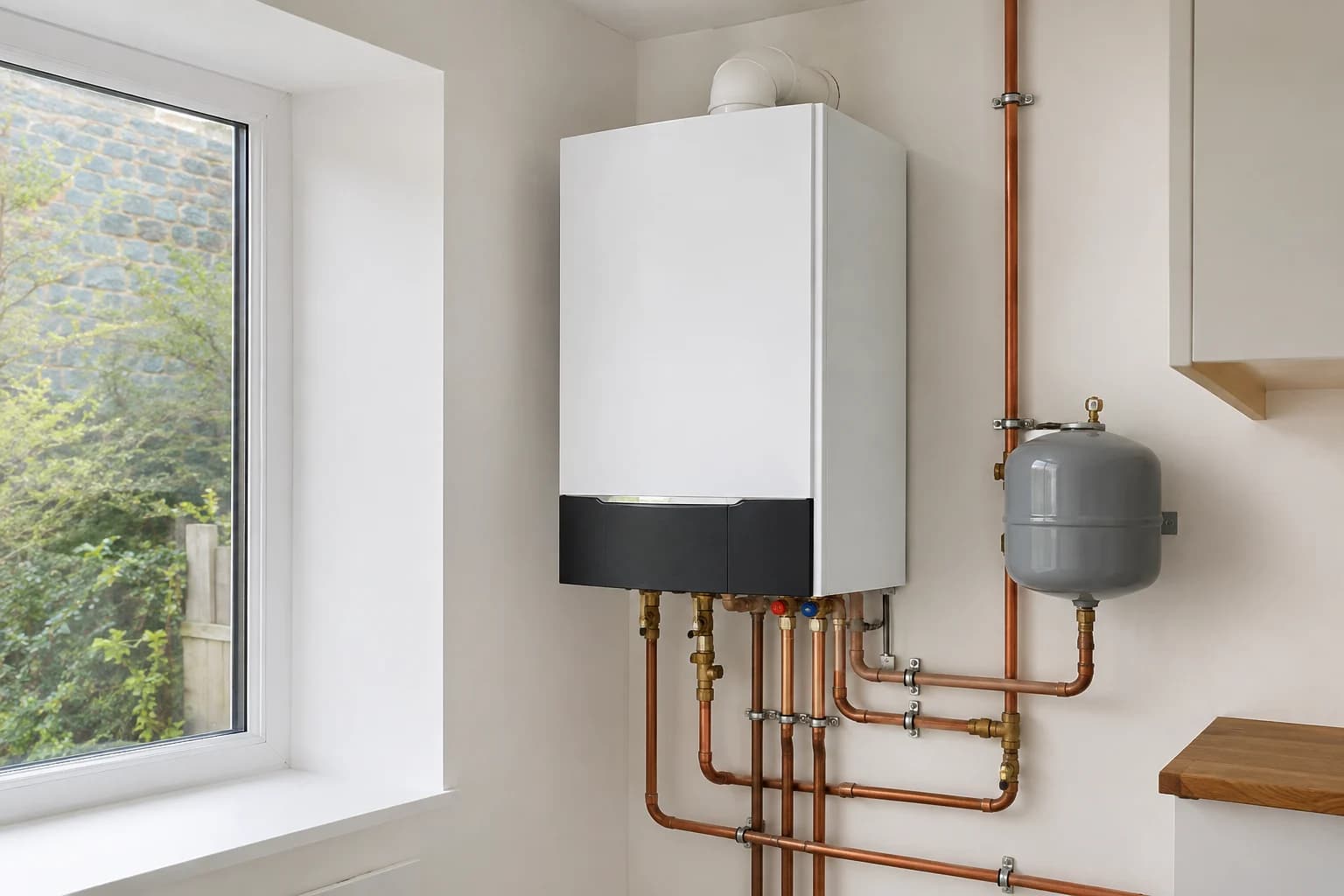
Boiler problems can involve the burner, controls, pumps, valves, pressure, expansion tank, venting, water quality, or distribution system. CMB HVAC evaluates the complete supported system before recommending repair or replacement.

Technician inspecting furnace ductwork in a basement
5.0 ★
369 Google Reviews
Free
Service Call
Upfront
Fixed Pricing
Licensed
UT 12883822-5501

Boiler Service for Supported Hydronic Heating Systems

Boilers are their own discipline. Where a furnace fails in its ignition sequence, a boiler's troubles live in water: pressure, expansion, circulation, zone valves, air in the piping, and water quality. We diagnose them as hydronic systems — not furnaces with pipes — and we're specific about what we support: hot-water (hydronic) systems including combi units that also make domestic hot water.

What we're honest about not claiming: steam systems and new radiant design work are outside what we take on. If your system is one of those, we'll tell you on the phone rather than learn on your dime — and point you toward someone who does that work every day.

Boiler Competence, Stated Precisely

  • Supported types, listed plainly

    Hot-water boilers — gas-fired, including combi units for combined heat and hot water. We'll tell you if yours isn't one of them.

  • Water-side diagnosis

    Pressure, expansion tank, pumps, zone valves, and air elimination tested as a system — the water side decides most boiler calls.

  • Licensed gas work

    Utah HVAC license 12883822-5501, with gas and combustion work performed to code and documented.

  • Findings in writing

    Every diagnosis ends with the cause named, the repair quoted flat-rate, and the readings documented.

When to Call About a Boiler

Boiler symptoms cluster around water behavior — pressure, circulation, and heat delivery.

  • Pressure keeps dropping

    A system that needs regular top-ups is describing a leak or an expansion problem. Worth finding before it becomes water damage.

  • Some rooms stay cold

    Uneven zones point at zone valves, circulation, or air in the piping — the distribution side, not the burner.

  • No heat at all

    The burner, controls, and safeties get tested in sequence — after the water side is proven, not before.

  • Banging, gurgling, or kettling

    Noises are air, flow, or scale describing themselves. Each has a different fix and none improves with neglect.

What Boiler Service Includes

  • Controls, safeties, and the operating sequence tested
  • System pressure verified, expansion tank checked, fill assembly inspected
  • Pumps and zone valves exercised and measured
  • Air elimination checked; bleeding where the design allows
  • Burner and combustion inspected where accessible; venting visually verified
  • Leaks surveyed across the boiler, piping, and emitters
  • Water quality observations noted — with treatment discussed where relevant
  • Findings explained with flat-rate options in writing before work starts

How We Diagnose a Boiler

  1. Controls & safeties

    Thermostats, aquastats, and safety devices proven before anything else — the sequence must be allowed to run.

  2. Water side

    Static pressure, expansion tank acceptance, fill valve behavior — the system's blood pressure, measured not assumed.

  3. Flow & zones

    Pumps and zone valves exercised; cold zones traced to valves, air, or balance rather than blamed on the boiler.

  4. Burner & combustion

    Where accessible: burner condition, ignition, and combustion observed and recorded — gas work to code.

  5. Findings & options

    The cause named in plain English, the repair quoted flat-rate, and replacement compared honestly when it belongs in the conversation.

Repair, Component Replacement, or New Boiler

Boiler replacement is a bigger design conversation than a furnace swap — here's how the decision is framed.

  • Repair the cause

    Zone valves, pumps, expansion tanks, and controls are ordinary repairs on a healthy boiler — often same-visit work at a flat rate.

    Best for: sound boilers with a single failed component

  • Repair now, plan the replacement

    Get through the season, then design the replacement on your schedule — the smart path when the boiler is old but the failure is minor.

    Best for: aging boilers with repairable faults

  • Replace the boiler

    A replacement starts with a heat-loss evaluation and the distribution system's reality — design water temperature, zones, piping — not a like-for-like box swap.

    Best for: failed heat exchangers, chronic leaks, or end-of-life equipment

HVAC condensate drain setup with safety switch.
Condensing boilers add a condensate system to the water-side list — one more thing we check before calling any repair complete.

What Drives Boiler Costs

Boiler pricing swings wider than furnace work because the water side and the piping are part of every job's scope.

  • Which side failed

    A zone valve and a heat exchanger are different worlds. Water-side repairs are often modest; sealed-unit and exchanger failures are not.

  • Accessibility & piping

    Packed mechanical rooms and original piping make ordinary jobs bigger. Access is priced into the flat rate, never discovered after.

  • Water quality

    Hard-water scale and chronic air problems drive repeat failures — sometimes the honest quote includes fixing the cause, not just the symptom.

  • Replacement design scope

    A new boiler is designed to the heat loss and the emitters — output, turndown, venting, and controls — not matched to the old nameplate.

Repairs are quoted flat-rate in writing before work starts; replacements are quoted as a designed scope after the heat-loss evaluation, with every component itemized. We don't publish boiler price lists — the honest range between a zone valve and a designed replacement is too wide for one number to mean anything.

How Boiler Service Runs

  1. Diagnose the system

    Free service call: controls, water side, flow, and combustion tested in order until the cause is named.

  2. Quote in writing

    Flat-rate options, itemized — including the repair-vs-replace comparison when the boiler's age makes it live.

  3. Repair or replace

    Verified cause fixed with correct parts; replacements designed to the heat loss and commissioned end to end.

  4. Verify & document

    Pressure, temperatures, and operation verified across zones. Readings documented and left with you.

Hard Water and Long Seasons

Utah is hard-water country, and hydronic systems notice: scale and mineral content show up as noisy operation, circulation problems, and components that age faster than their book life. Add a long heating season and you get the classic local pattern — small chronic issues (a slow pressure drop, one lukewarm zone) that homeowners live with for years before they become a real call. Finding those causes is the quiet value of an actual hydronic diagnosis.

  • Pressure that needs monthly top-ups is describing something — find it before it finds your floor
  • Combi systems make your hot water too: boiler problems can start at the kitchen tap
  • Fall is the right season for the annual check, same as furnaces

The Hydronic Vocabulary

The terms from your invoice, explained — and the anchors for the symptoms above.

Pressure & Expansion

A hot-water boiler runs on a sealed, pressurized loop — typically around 12–15 psi cold for a typical two-story home. The expansion tank absorbs the water's growth as it heats; when its bladder fails, pressure swings violently and the relief valve weeps. Chronic pressure loss means the system is describing a leak or a fill/expansion fault — we find which, because top-ups are a habit, not a fix.

Zone Valves & Circulation

Each zone's thermostat opens a valve or starts a pump, and heated water flows where it's told. Cold rooms usually live here: a stuck zone valve motor, a tired pump, air locked in a loop, or balancing that was never right. We trace the cold zone to its cause — valve, flow, or air — instead of turning up the boiler and calling it fixed.

Controls & Safeties

Aquastats, thermostats, and safety devices decide when the burner fires and what happens when something's wrong. A boiler that won't run, runs constantly, or short-cycles often has a control story — and the safeties get tested as part of every diagnosis, because on a pressurized hot-water system they're not optional equipment.

Noise: Air, Flow, and Scale

Gurgling is usually air in the piping. Banging can be flow or pipe movement. Kettling — a rumbling like a kettle on the boil — is scale on the heat exchanger trapping steam bubbles. Each noise is a symptom with a different fix, from air elimination to water treatment, and none of them improves with being ignored.

Replacement Design

A boiler replacement is a design job: heat loss calculated for the home, output and turndown matched to it, design water temperature checked against the existing emitters (radiators and baseboard were sized for a temperature — the new boiler has to speak it), venting, condensate on high-efficiency models, pumps and controls specified, and the finished system commissioned end to end. A like-for-like box swap skips every one of those steps; we don't.

Hydronic Questions, Answered Straight

What types of boilers does CMB service?
Supported hot-water (hydronic) systems — gas-fired boilers including combi units that also produce domestic hot water. We're deliberately specific about this: boiler work is a real discipline, and pretending at everything is how homeowners get burned. What we don't claim: steam systems and new radiant design. If your system is outside our lane, we'll say so on the phone and point you toward a specialist rather than learning on your equipment.
Why is my boiler losing pressure?
A sealed system holds its charge; if you're topping it up monthly, something is letting water out or mismanaging expansion. The usual suspects: a small leak at a radiator, valve, or buried fitting; a failed expansion-tank bladder making the relief valve weep on every heat cycle; or a fill valve slowly passing. We isolate and test to find which — because a pressure habit that goes unexplained for years tends to end as water damage, and the fix was almost always simpler earlier.
Why do some zones stay cold?
Cold zones are a distribution story: a zone valve that isn't opening (motor failed, or stuck), a pump that's weak or airlocked, air trapped in that loop, or balancing that never favored that run. The burner can be performing perfectly while one room stays cold — which is why 'turn the boiler up' isn't a fix. We exercise the zone's valve and trace flow until the cause is named, then quote the specific repair flat-rate.
Can an old boiler be replaced with a high-efficiency model?
Often — but it's a design conversation, not a box swap. High-efficiency condensing boilers run cooler design water temperatures and add condensate drainage; your existing radiators or baseboard were sized for a specific water temperature, so the new system's output has to be matched to what the emitters can deliver. We start with a heat-loss calculation and a look at the distribution system, then quote the full designed scope — sometimes the answer is a modern boiler that speaks your emitters' language; occasionally it's honestly 'keep the old one running.'
Do you service combi boilers or radiant heat?
Combi boilers, yes — supported hot-water combi units are squarely in our lane, including the domestic-hot-water side that makes them both boiler and water heater. Existing radiant loops that are part of a hydronic system we can service as part of the distribution side. What we don't claim is new radiant system design — that's a specialist design discipline, and we'd rather refer you to someone who does it daily than improvise on your floors.

Hydronic Problems Need Hydronic Answers

Book online or call. The water side tested first, the cause named in plain English, and the fix quoted flat-rate.