Skip to content

Davis & Salt Lake County

CMB HVAC — Utah's Local HVAC

Furnace Repair

Furnace Repair With a Clear Diagnosis

No heat, repeated shutdowns, unusual noise, weak airflow, or an unreliable ignition cycle can come from several electrical, airflow, fuel, venting, or control problems. CMB HVAC tests the system and explains the failure before recommending a repair.

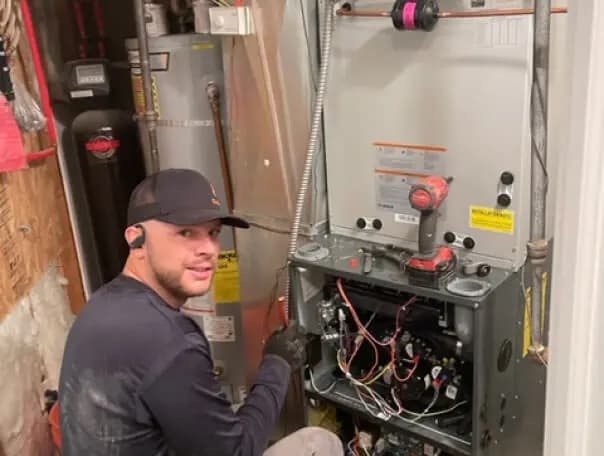
Technician checking a furnace flue pipe in a utility room
5.0 ★
369 Google Reviews
Free
Service Call
Upfront
Fixed Pricing
Licensed
UT 12883822-5501

Furnace Repair With a Clear Diagnosis

A furnace is a sequence: thermostat call, draft, ignition, flame proof, warm-up, blower, repeat. When any step fails, the board stops the sequence and the symptom you notice — no heat, short cycling, a house that never quite warms — is just the end of a chain. We walk the chain with meters until the failing step is named, then quote the repair flat-rate in writing.

Safety first, always: if you smell gas, leave the building and call your gas utility or 911 from outside. If a CO alarm sounds, same answer. Equipment gets repaired after people are safe — and any heat-exchanger or safety concern we find is documented with the evidence and the inspection method, not a scary assertion.

Tested, Quoted, Fixed, Verified

  • The full sequence, tested

    Thermostat to flue — we find where the sequence stops instead of guessing at the most expensive part.

  • Documented safety findings

    Any safety concern comes with the evidence: inspection method, measurements, photos. No fear, no assertions.

  • Flat-rate repairs

    Written options before work starts — and a straight repair-versus-replace conversation when it's close.

  • Verified before we leave

    The completed repair is tested through multiple full cycles — ignition through blower — not just declared done.

When to Call for Furnace Repair

Tap a symptom to jump to the component most often behind it — the diagnosis will confirm.

  • Starts, then shuts off

    Lights up, runs a few seconds or minutes, shuts down. The classic — and most misdiagnosed — furnace symptom.

  • Won't light at all

    Clicking with no flame, or nothing happening at the call for heat. Ignition is a chain, not a single part.

  • Running but rooms stay cold

    The furnace fires but the house doesn't warm — blower, filter, or duct problems hide here.

  • Shuts down when it gets hot

    Runs fine, then stops partway through heating — and the pattern repeats. Overheating has causes worth finding.

What's Included in a Furnace Repair Call

  • Full operating-sequence diagnosis, from thermostat call to venting
  • Safety controls tested: limits, pressure switches, flame sensing
  • The failure explained in plain English — where the sequence stops, and why
  • Flat-rate repair options in writing before any work begins
  • Repair-versus-replace guidance when age and condition make it a real question
  • Post-repair testing through multiple complete cycles, with the readings shared
  • Free service call on every diagnostic visit

How We Diagnose a Furnace

The board already knows where the sequence fails — its codes and our meters agree faster than guesswork.

  1. Thermostat & power

    The call for heat confirmed at both ends — settings, wiring, transformer, and the board's flash codes read first.

  2. Safeties & draft

    Pressure switch and venting proven before ignition is blamed — a blocked intake flunks the draft and stops everything.

  3. Ignition & flame proofing

    Igniter output, gas valve timing, and flame-sensor signal measured — the three-step handshake that lights and keeps the burn.

  4. Combustion & exchanger

    Burner condition, flame pattern, and heat-exchanger integrity assessed with the method documented — never asserted.

  5. Blower & airflow

    Filter checked, blower amp draw and temperature rise measured — the pair that turns combustion into a warm house.

Flashing codes on the furnace board? Count them (color and pattern) and call (385) 865-6749 — they narrow the search fast.

Repair, Stabilize, or Replace

For significant repairs the honest quote includes the comparison — both figures in writing on the same visit.

  • Repair the failed component

    The right call when the sequence fails at a worn part — igniter, flame sensor, pressure switch — and the rest of the furnace measures sound.

    Best for: single failed components on otherwise healthy equipment

  • Repair now, plan replacement

    Fix what gets you through the winter, and take a replacement quote home to think about — scheduled on your terms, not during a cold snap.

    Best for: older furnaces with repairable faults and a history accumulating

  • Replace the furnace

    A cracked heat exchanger (documented), a discontinued board-and-ignition stack, or repeated significant repairs shift the math. We'll show both numbers.

    Best for: exchanger failures, obsolete parts, or repair-history patterns

Close-up of an AC blower motor.
Blower problems can be the motor, the module, the control signal, or the duct static it's fighting — we test before we replace.

What Drives the Cost of a Furnace Repair

The symptom rarely sets the price — the failing step in the sequence does. Your written quote already accounts for it.

  • Which step failed

    A flame sensor and a blower motor both stop the heat; their part costs are orders of magnitude apart. The diagnosis determines the tier.

  • Efficiency class

    Condensing (90%+) furnaces add condensate and a second heat-exchanger pass — more parts in the sequence, sometimes more in the repair.

  • Parts availability

    Common wear parts ride on the truck. Obsolete boards and rare components can add sourcing time — we'll tell you honestly which it is.

  • Access

    A closet furnace and a crawl-space unit are different jobs with the same part. Access is priced into the flat rate, not discovered after.

Repairs are quoted flat-rate before work starts and the service call is free when we do the work. We don't publish a price list because furnaces fail in dozens of different places — an itemized written quote beats a range that fits neither job.

How a CMB Furnace Repair Runs

  1. Diagnose the sequence

    Free service call. Codes read, safeties proven, ignition tested, airflow measured — until the failing step is named.

  2. Quote in writing

    Flat-rate options, itemized. Repair-versus-replace comparison included when it's a live question.

  3. Repair

    The verified cause is fixed — not the symptom. Correct parts, correct setup, gas and electrical work to code.

  4. Verify through cycles

    Multiple complete heating cycles tested and measured. You get the readings and the explanation of what caused the failure.

What Utah Winters Ask of a Furnace

Wasatch Front furnaces live long lives but work hard ones: long cold seasons, wide overnight swings, and dry air that carries dust straight into filters and blowers. The classic local pattern is the first-hard-freeze failure — anything marginal survives the shoulder season and quits during the first sustained cold. The second pattern is dust: a filter that's been in since March is the most common thing standing between a furnace and the airflow it needs.

  • First cold snap is peak breakdown season — a fall tune-up is cheaper than a January service call
  • Check the filter before you call; a clogged one mimics half the expensive failures
  • Winter inversion air is fine dust season — filters load faster than you'd think

The Parts in the Sequence

The terms from your invoice, explained — and the anchors for the symptoms above.

Ignition System (Igniter & Pilot)

The hot-surface igniter (or standing/intermittent pilot on older units) that lights the burners. A cracked igniter or a failed pilot means clicking with no flame — but a furnace that won't light can equally be the gas valve, pressure switch, venting, board, or a safety condition upstream. We follow the sequence to find where it actually stops before replacing anything, because a new igniter doesn't fix every furnace that won't light.

Flame Sensor

The rod that proves flame to the control board; no proof, no continued gas. A contaminated sensor is the classic cause of 'lights, runs seconds, shuts off' — cleaning restores it — but identical symptoms can come from grounding, wiring, gas pressure, or venting. We read the flame signal (in microamps) before cleaning or replacing, then test through multiple cycles and check what contaminated it in the first place.

Pressure Switch

The safety that proves the inducer is moving combustion air before allowing ignition. It trips on venting blockages, blocked intake/exhaust pipes, failing inducers, and — in a twisted irony — the tiny tubing that connects it. A furnace that clicks, tries, and gives up often stops here; the fix might be a switch, or might be the venting the switch was honestly reporting.

Limit Switch

The over-temperature safety that shuts burners off when the furnace gets too hot. It's doing its job when it trips — the question is why: a clogged filter, a failing blower, closed supply registers, or an undersized return are the usual drivers. Repeated limit trips are a symptom with a cause, and we find the cause rather than resetting our way through the winter.

Inducer (Draft) Motor

The small fan that establishes draft through the heat exchangers before ignition — the 'airplane' sound that starts every modern furnace cycle. Rumbling, squealing, or a hum with no spin points here. Without proper draft the pressure switch won't prove, the burners won't light, and nothing downstream matters — which is why it gets tested early in the sequence.

Blower Motor

The fan that moves heated air through your ducts — and cooled air in summer, on most setups. Failures live in the motor, its control module (on variable-speed units), the capacitor where fitted, the control signal, or the wheel and the static pressure it's fighting. We test which before replacing, install the correct replacement, set airflow to the equipment's specification, and verify both heating and cooling operation when the blower serves both.

Control Board

The brain that runs the sequence and stores the flash codes. Boards fail — but they're also blamed for faults that actually live in the sensors, safeties, and wiring feeding them. We verify the inputs before condemning the brain, because a board swap on a furnace with a shorted safety is money spent twice.

Heat Exchanger Inspection

The sealed metal chambers that separate combustion from the air you breathe — the one component where evidence matters most. We inspect by whatever method the furnace allows: visual access, combustion measurements, pressure behavior, camera inspection, and manufacturer guidance, and we document what we found with photos and the method used. A suspected crack is a finding with evidence, not a sales line — and if you ever get a second opinion, that documentation travels with you.

Straight Answers Before You Book

Why does my furnace start and then shut off?
The burners light, the board doesn't see proof, and gas shuts off — usually within seconds. The classic cause is a contaminated or failed flame sensor, but grounding problems, wiring, gas pressure, venting, and control faults produce the same pattern. It's the single most misdiagnosed furnace symptom precisely because several parts can produce it, which is why we read the actual flame signal before cleaning or replacing anything. The fix itself is usually modest once the cause is confirmed.
What does a flashing furnace code mean?
The control board is telling you where it thinks the sequence stopped — a numeric flash pattern listed on the furnace door or in the manual. Codes are a starting point, not a verdict: a 'pressure switch' code can mean the switch, or the venting it monitors, or the tubing to it. Note the code (how many flashes, fast or slow) and tell us when you book — it genuinely narrows the search. Boards also lie occasionally, which is why the meters get the final word.
Can a flame sensor be cleaned or must it be replaced?
Often cleaned, sometimes replaced — the reading decides. We measure the flame signal in microamps first; a contaminated sensor reading low gets cleaned and re-measured, and if the signal comes back to spec, cleaning was the fix. A sensor that reads poorly even when clean, or one that's corroded or damaged, gets replaced. Then we test through several full cycles and look for whatever contaminated it — because a sensor that fouls every season is describing another problem.
How is a heat exchanger inspected?
By method, and you get the method in writing. Depending on the furnace, that means visual access where the design allows it, combustion measurements that reveal what's leaking where it shouldn't, pressure behavior during operation, camera inspection through accessible openings, and manufacturer guidance for the specific model. Any suspected defect comes with photos and the evidence behind the finding. We take this seriously enough to document it and calmly enough not to sell fear — a real finding means replacement, so the evidence has to be real too.
When is furnace replacement more sensible than repair?
When the failed component is the heat exchanger (with documented evidence), when parts for the ignition stack or board are obsolete, or when the repair history is repeating — a second significant repair in a short window is a trajectory, not a coincidence. Age alone doesn't decide it; a 15-year-old furnace with healthy exchanger and honest parts availability can be worth repairing. The quote visit puts both numbers in front of you with the reasoning spelled out.

Get the Sequence Tested, Not a Guess

Book online or call. We'll find where the heat stops, quote the fix flat-rate, and verify it through full cycles.