
Skip to content

Davis & Salt Lake County

CMB HVAC — Utah's Local HVAC

Whole-Home Humidifiers

Whole-Home Humidity Control for Dry Utah Winters

A whole-home humidifier can add controlled moisture through the HVAC system, but it must be sized, installed, drained, maintained, and adjusted to avoid excess moisture and window condensation. CMB HVAC evaluates the home and system before recommending a type and control.

article featured prepparing for utah's seasons
5.0 ★
369 Google Reviews
Licensed
UT 12883822-5501
Free
Service Call
Upfront
Fixed Pricing

Whole-Home Humidity Control for Dry Utah Winters

Utah's winters are famously dry — furnace heat plus cold, thin air pushes indoor humidity down to levels that chap skin, crack woodwork, and make 68°F feel like 62. A whole-home humidifier answers through the ductwork itself, adding measured moisture to heated air. The catch: moisture is the one indoor-air factor where too much is a genuinely worse problem than too little, which is why sizing, drainage, and control strategy come before the box on the shelf.

The control strategy is the part most installs skip: the safe indoor setting falls as outdoor temperature falls, because cold glass and uninsulated corners are where invisible humidity turns into visible condensation. We set humidifiers with that outdoor-temperature relationship built in, walk you through the seasonal adjustment, and put the maintenance schedule in writing — a humidifier is a small appliance with a real service life, not a set-and-forget accessory.

Installed to Add Moisture — and Only Moisture

  • Sized to the house

    Home size, envelope tightness, and system runtime — the inputs that decide which type and capacity fit.

  • Water, drain, power done right

    Supply tap, drain line, and electrical installed to code — the details that separate a humidifier from a leak.

  • Condensation-aware settings

    The control set against outdoor temperature, so January doesn't paint your windows.

  • Maintenance in writing

    Pad or canister intervals, seasonal startup and shutdown — the schedule that keeps it working next winter.

When Humidity Control Makes Sense

  • Static shocks and dry skin

    The classic low-humidity tells — annoying on their own, and hard on wood floors and trim.

  • Windows sweating

    Condensation on cold mornings means humidity and temperature are out of balance — an adjustment or a fix, case by case.

  • An existing humidifier gone quiet

    No humidity reading change, water where it shouldn't be, or a unit that hasn't been serviced in years.

  • Gaps and cracks in woodwork

    Wood shrinks as it dries — recurring winter gaps in floors and furniture are the house reporting low humidity.

What Humidifier Installation Includes

  • Home and system evaluation: size, tightness, runtime, and duct access
  • Type and capacity recommendation — with the trade-offs named
  • Duct mounting, water supply tap, drain line, and electrical to code
  • Control setup: humidistat placement and outdoor-temperature-aware guidance
  • Testing through full heating cycles, with the water side checked
  • Homeowner walkthrough: seasonal adjustment and the condensation warning signs
  • Maintenance schedule in writing — pads, canisters, and cleaning

How We Fit Humidity to a Home

  1. Measure the dryness

    Indoor humidity read on-site and discussed against the season — the baseline every decision starts from.

  2. Study the house

    Size, envelope tightness, and how hard the furnace runs — the inputs that set the capacity a humidifier needs.

  3. Check the mechanics

    Duct access, water supply, drain proximity, and control wiring — where the humidifier can live and be serviced.

  4. Recommend the type

    Bypass, fan-powered, or steam — chosen for the house and system, with the honest trade-offs of each.

  5. Set & teach

    Humidistat set with the outdoor-temperature relationship, adjustment calendar explained, warning signs demonstrated.

Bypass, Fan-Powered, or Steam

The common whole-home types, and what each asks of your system.

  • Bypass humidifier

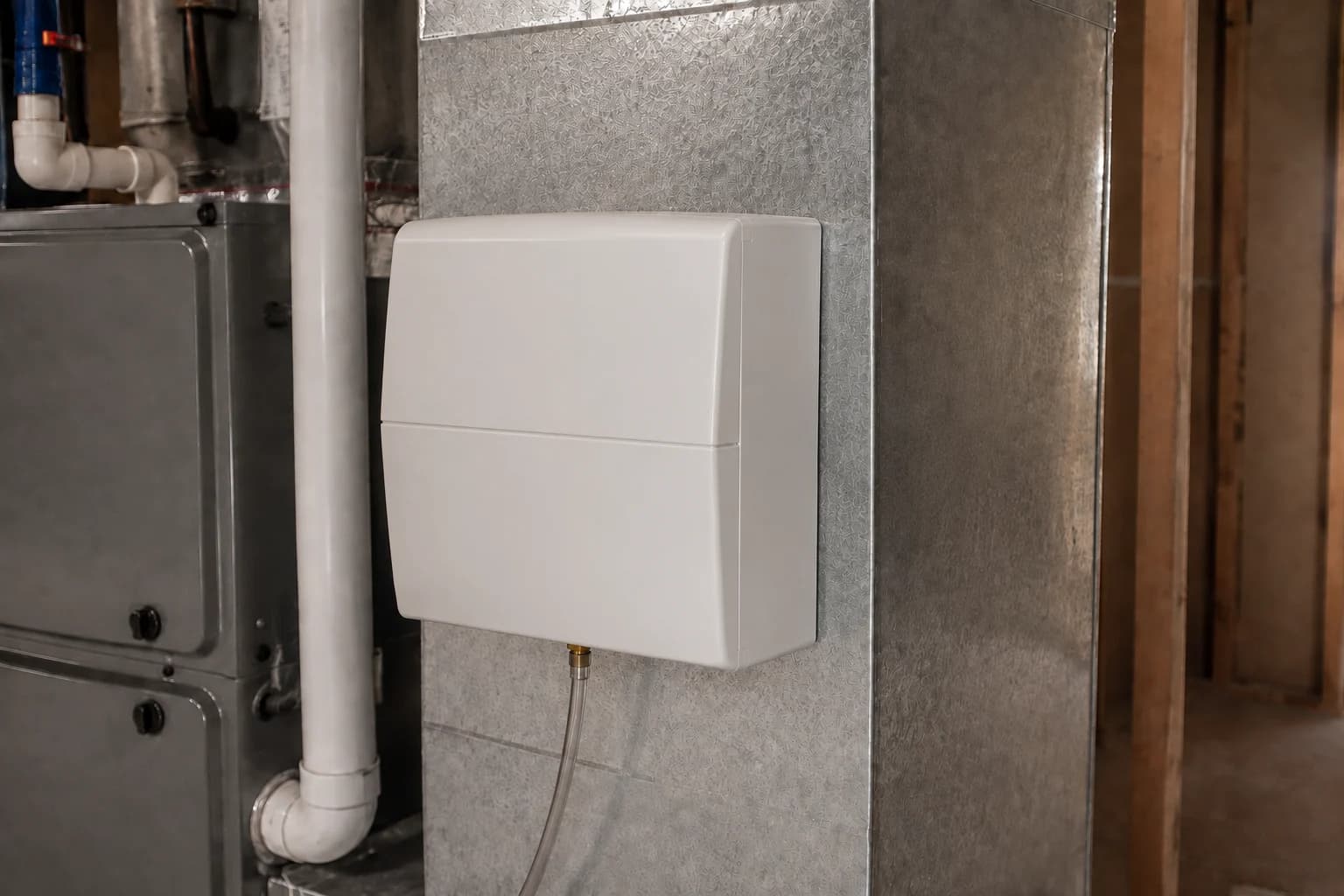
    Uses the furnace blower's own air through a water panel — no extra power beyond the control, simplest to maintain, and the most common choice where duct clearances allow.

    Best for: homes with workable duct space and a standard furnace

  • Fan-powered humidifier

    Carries its own small fan, so it moves air through the panel even when the system runs lightly — more output per unit, and a bit more to service.

    Best for: homes needing more moisture than a bypass can deliver

  • Steam humidifier

    Makes its own moisture independent of the HVAC call — the strongest output and the most precise control, with the highest install and maintenance requirements.

    Best for: very dry, tight, or large homes with serious moisture demand

What Drives Humidifier Costs

The unit price matters less than what your ducts, water, and drain make the install look like.

  • Type & capacity

    Bypass sits at the value end, steam at the top — capacity follows the house's measured moisture demand, not a default.

  • Water & drain access

    A nearby supply tap and drain make an ordinary install; long runs, or a drain that doesn't exist yet, add real scope.

  • Duct arrangement

    Bypass units need return-side duct space for their duct; fan-powered and steam units need their own mounting clearance.

  • Controls

    Basic humidistat versus outdoor-temperature-aware control — the control strategy is what protects your windows.

Installations are quoted flat-rate with the maintenance schedule included — pad or canister costs and intervals stated per manufacturer guidance. We don't promise a universal humidity number for every winter day, because the safe setting genuinely moves with outdoor temperature; the visit leaves you with the range and the adjustment habit instead.

How a Humidifier Install Runs

  1. Evaluate

    Humidity measured, house studied, duct and water access checked — the fit determined before the quote.

  2. Install

    Unit mounted, water tap and drain run, electrical and control wired to code, everything sealed and supported.

  3. Set the strategy

    Humidistat configured with the outdoor-temperature relationship, seasonal adjustment explained in plain steps.

  4. Verify & schedule

    Tested through full heating cycles, water side checked, maintenance calendar put in writing.

The Driest Heating Season in the Country

The Wasatch Front's combination of high altitude, cold winters, and furnace-heavy heating makes for some of the driest indoor air you'll find in a developed country — single-digit relative humidity indoors is normal in January without humidification. Local homes also swing hard: a setting that feels right during a mild stretch can fog the windows during the first Arctic outbreak, which is exactly why the outdoor-temperature-aware control strategy matters more here than the brand on the box.

  • Expect to adjust the setting down during extreme cold — that's the system working, not failing
  • Hard water keeps the local pads and canisters on a shorter service interval than the manual suggests
  • Fall is install season: humidifiers go in when the furnace does, before the dry air arrives

The Humidity Vocabulary

The terms from your quote, explained — and the anchors for the signs above.

The Three Types

Bypass units borrow the furnace blower, pulling warm air through a water panel on the way back to the return — simple, effective, and dependent on the blower running. Fan-powered units carry their own small blower, producing more moisture per hour and working during lighter HVAC calls. Steam units boil water to make vapor on demand — independent of the HVAC call, the most output and control, and the most installation and maintenance. Which fits is decided by the house's measured demand and the system's arrangement, not by preference alone.

Controls & the Condensation Line

A humidistat decides when moisture is added; the skill is in where the setting sits relative to the weather outside. As outdoor temperature drops, window glass and poorly insulated corners get colder, and indoor humidity condenses on them sooner — so the safe indoor setting literally moves with the forecast. We set the control with that relationship, teach the seasonal adjustment, and point out the early warnings: persistent window fog, moisture at sills, or damp patches near cold corners.

Pads, Canisters & Seasons

A humidifier's water side is a consumable: bypass and fan-powered units run water panels (pads) that Utah's hard water scales up fast, and steam units wear electrodes or canisters on the manufacturer's schedule. A skipped pad doesn't just stop humidifying — it can grow things you'd rather not circulate. Expect a pad or canister change at least seasonally, an honest look at the drain line, and a shutdown in spring so the unit doesn't sit wet all summer.

Before the Dry Season

What humidity level should I use in winter?
A range that moves with the weather, not a fixed number. Milder winter days tolerate settings that an Arctic night would turn into window condensation — so the honest answer is a starting point around the low end of the comfortable range, adjusted downward during extreme cold and upward during mild stretches. We set the control with the outdoor-temperature relationship built in and walk you through the seasonal adjustments. If you're ever fogging windows at the sill, that's the control asking to be turned down — the house is telling you before anything is damaged.
Can a humidifier cause condensation?
Yes — that's the one real failure mode of over-humidifying, and it's why the control strategy matters more than the brand. Moisture added to air will find the coldest surfaces in the house: single-pane windows, poorly insulated corners, behind furniture against exterior walls. Held there, it fogs, drips, and eventually grows things. The fix is setting humidity against outdoor temperature and watching the early signs. A correctly set humidifier adds comfort without ever showing you a fogged window; an incorrectly set one advertises itself within a week.
Which type of humidifier fits my home?
The house decides: measured moisture demand, how tight the envelope is, how hard the system runs, and what the duct and drain arrangement allows. Bypass units are the value choice where return-side duct space exists; fan-powered units deliver more when the demand outruns a bypass; steam answers serious moisture demand in tight or large homes with the highest install and maintenance requirements. We size from the home's actual conditions at the visit — the honest version of 'it depends' with the trade-offs written down.
How often does it need service?
At minimum, the water panel (or steam canister) once per heating season — and Utah's hard water usually argues for checking it mid-winter too, since mineral scale is what actually stops humidifying. The drain line gets an annual look, the water side a seasonal shutdown so nothing sits wet through summer. Membership visits include the humidifier's seasonal service automatically, which is the easy way to never think about it; DIY-inclined owners can handle pads themselves with the walkthrough we provide at installation.
Will it work with a heat pump?
Yes, with one design consideration: heat-pump supply air runs cooler than furnace air, and bypass humidifiers rely on warm furnace air to carry moisture — so on heat pumps the honest choices are fan-powered or steam units, which don't depend on supply temperature the same way. The rest of the fit is the same: measured demand, water, drain, and the outdoor-temperature-aware control strategy. If you're pairing humidity with a heat-pump install, the ductwork evaluation covers both decisions in one visit.

Stop Living in a Desert This Winter

Book online or call. Sized to the house, set against the weather, and maintained on a written schedule.