
Skip to content

Davis & Salt Lake County

CMB HVAC — Utah's Local HVAC

Comfort & Energy Assessment

A Structured Look at How Your Home Heats and Cools

CMB HVAC assesses HVAC performance and home comfort factors — system condition, static pressure, temperature split, combustion safety, controls, visible insulation and duct condition — and provides written findings with prioritized recommendations.

HVAC technician with company logo in home setting.
5.0 ★
369 Google Reviews
Licensed
UT 12883822-5501
Free
Service Call
Upfront
Fixed Pricing

A Structured Look at How Your Home Heats and Cools

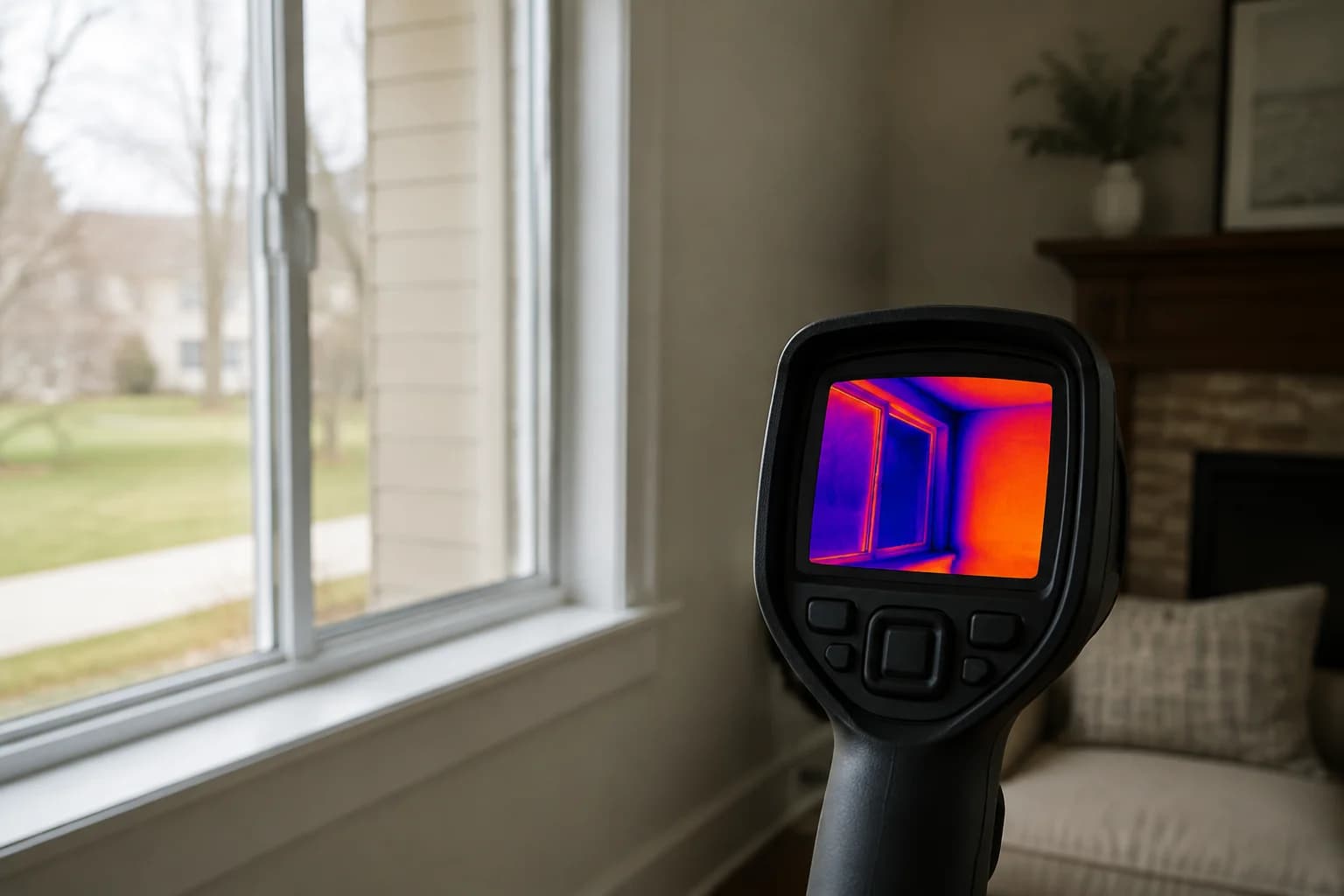
This is a structured HVAC assessment, not a certified home energy audit — the distinction matters and we'd rather state it up front. Certified audits (blower-door testing, infrared thermography, RESNET/BPI scoring) are their own discipline; when a home genuinely needs that level, we say so and refer. What we do is the HVAC-side version: a technician, real instruments, and a defined measurement menu applied to the system that heats and cools your house — with the findings written down.

The deliverable is a prioritized report: what we measured, what it says, what's worth doing and in what order, and what's fine to leave alone. Some assessments end with 'your system is healthy, change your filter on schedule' — which is a genuinely good outcome, and you'll never hear us invent problems to justify the visit. The visit itself is our free service call; the assessment is what that visit is.

What the Assessment Measures

  • Airflow & static pressure

    The system's breathing measured — the number behind weak rooms, noise, and early equipment death.

  • Temperature split

    Supply versus return temperatures — the honest verdict on whether the equipment is actually delivering.

  • Combustion safety & CO

    Furnace combustion and carbon-monoxide screening at the equipment — safety findings lead the report.

  • Findings in writing

    Measurements, interpretation, and a prioritized list — yours to act on with us or anyone.

Good Moments to Book One

Each scenario reads the system differently — the anchors explain what we're looking for.

What the Visit Includes

  • System identification: equipment age, model, condition, and service history as known
  • Static pressure measured and compared to the equipment's rated capacity
  • Temperature split (supply vs. return) measured in heat and/or cool mode
  • Combustion and carbon-monoxide screening at gas equipment
  • Thermostat operation, programming, and sensor placement reviewed
  • Filter condition, size, and fit checked; humidistat settings if fitted
  • Visible duct observations: disconnected runs, crushed flex, visible leakage
  • Attic insulation depth and envelope observations where access allows
  • Written findings: measurements, interpretation, prioritized recommendations

The Assessment, Step by Step

  1. Talk first

    Your comfort complaints, bill history, and the house's quirks — the symptoms aim the instruments.

  2. Measure the system

    Static pressure, temperature split, combustion, controls — the defined menu, applied with real gauges.

  3. Walk the house

    Visible ducts, insulation depth where accessible, register performance room by room.

  4. Interpret

    Numbers against manufacturer specs — what's genuinely wrong, what's marginal, what's fine.

  5. Report

    Written findings with priorities: safety first, then comfort, then efficiency. No obligation attached.

The Visit Is Free — the Follow-Ups Are Quoted

The assessment is our free service call. Costs enter only if you choose to act on the findings.

  • The assessment itself

    No charge — it's the same free visit a diagnostic comes from, pointed at the whole system instead of one symptom.

  • Findings you act on

    Any recommended work — repairs, sealing, equipment — is quoted flat-rate separately, and only if you ask.

  • Referrals outside our scope

    Blower-door testing, audits, insulation contracting — referred to specialists, with no markup and no obligation.

No charge for the assessment visit itself; written findings are yours regardless of what you do next. We publish no point-count gimmicks — the measurement menu above is the actual menu. When findings lead to work, that work is quoted flat-rate before anything begins.

What the Visit Looks Like

  1. Book & prep

    Book online or call; we'll ask what prompted the assessment so the visit aims at your actual questions.

  2. The visit

    About an hour: instruments on the system, a walk through the house, your questions answered as we go.

  3. Findings, in person

    Before leaving, the technician walks you through what was measured and what it means — in plain language.

  4. The written report

    Measurements, interpretation, and prioritized recommendations — yours to keep, act on, or ignore.

What Local Homes Typically Show

Patterns repeat in this region's housing stock: undersized or crushed return air making systems noisy and anemic, ducts leaking into attics and crawlspaces no one has inspected since construction, thermostat schedules from a previous owner, insulation that settled below where a Utah winter wants it, and combustion assemblies that have never had a carbon-monoxide screening despite decades of service. None of these is exotic — they're the ordinary results of equipment being serviced symptom-by-symptom instead of assessed as a system. The assessment's job is to find the few things in your house worth fixing and say so in writing.

  • Return-air problems are the most common finding in local homes
  • CO screening at gas equipment is the finding we're happiest to make boring
  • Attic access during the visit makes the insulation observations far more useful

Assessment Vocabulary

The terms you'll see in the findings — and the anchors for the scenarios above.

Static Pressure & Temperature Split

Static pressure is the resistance the blower works against — high readings mean the system is strangled (undersized returns, clogged filters, crushed flex), which shows up as weak rooms, noise, and shortened equipment life. Temperature split is the difference between supply and return air: in cool mode the air should drop roughly fifteen to twenty degrees through the system, in heat mode the rise should match the furnace's rated range. Numbers outside range point somewhere specific — low charge, dirty coil, airflow — instead of 'it's probably fine.' The report translates both into plain language.

Combustion Safety & CO Screening

For gas equipment the safety checks lead the visit: burner combustion observed, the heat exchanger inspected as far as its design allows, venting verified, and ambient carbon monoxide measured at the equipment. Any finding here is stated first, explained clearly, and treated as the priority it is — a system with a combustion-safety question gets that conversation before any comfort or efficiency topic. If your home lacks CO alarms, the report says so; that recommendation doesn't wait for a contractor.

The Written Report & How to Use It

The findings are organized by priority: safety items first, then comfort problems with their measured causes, then efficiency opportunities with honest notes on payoff. Each recommendation stands alone — fix the return air without buying equipment, seal the ducts without the premium tier — and every one is quoted only if you ask. Homeowners use these reports to sequence work over seasons, to compare against other contractors' proposals, or as a pre-purchase reality check. It's your document; there's no expiry on using it.

What This Is — and Isn't

Is this a certified home energy audit?
No, and we'd rather be clear than impressive. A certified energy audit is its own discipline — blower-door depressurization, infrared imaging, RESNET or BPI credentials, and a scored rating your lender or program may require. What we do is an HVAC-focused assessment: a technician with instruments measuring how your heating and cooling system actually performs, plus visible-envelope observations. If your situation genuinely needs the certified version — a program requirement, a deep energy retrofit — we'll tell you and point you to auditors who do it. No overlap-creep, no pretending.
What exactly do you check?
The measurement menu is printed above and it's the real menu: equipment identification and condition, static pressure, temperature split, combustion and carbon-monoxide screening at gas equipment, thermostat operation and programming, filter condition, visible duct observations, and attic insulation depth where access allows. We don't advertise a 'multi-point inspection' number because the count is marketing; the menu is the promise. If something on it needs more time in your house, it gets that time — the list adapts to the home, not to a sales script.
How long does the assessment take?
Usually about an hour — longer if the house has questions worth pursuing, shorter if the system is young and healthy. The time splits between instruments on the equipment and walking the house with you: register by register, attic if accessible, thermostat and filters. We'd rather do it thoroughly once than schedule a follow-up for what the first visit should have covered. Book it like any other visit — online or by phone — and mention it's the assessment so we allocate the right appointment length.
Do I get a written report?
Yes — that's the deliverable. The technician walks you through the findings in person before leaving, then you get the written version: what was measured, what each number means against the equipment's specifications, and recommendations organized by priority — safety first, comfort second, efficiency third. There's no obligation attached; the report is valid whether you hire us for the follow-up work, hire someone else, or file it in a drawer. Pre-purchase and pre-quote are two of its most common uses, and both work exactly the same way.
Is it really free?
Yes — the assessment is our free service call, the same free visit any diagnostic starts from, pointed at the whole system rather than one symptom. The only costs ever attached are for work you choose to do afterward, and that work is quoted flat-rate in writing before anything begins. We don't use the visit to manufacture problems: a healthy system's report says exactly that, and some of our best customer relationships started with a report that recommended only a filter schedule and a thermostat reprogramming.

Get the Assessment on the Calendar

Book online or call. An hour of instruments and honest interpretation — the report is yours either way.